If a tap gives nothing in a Calgary cold snap, open it, find the cold spot and warm it gently with a hair dryer or space heater. Never use a flame. Here is how to tell a frozen house pipe from a frozen service line.
If a tap gives nothing during a Calgary cold snap, a pipe has most likely frozen somewhere between the meter and that tap. Leave the tap open, find the cold section (usually on an exterior wall, in a crawlspace, near the garage or feeding a hose bib) and warm it gently with a hair dryer, a space heater at a safe distance or hot towels. Never use a torch or any open flame. If no tap in the house works, including the one nearest the meter, the freeze may be at the meter or in the service line, and that is a different problem. Call a plumber if you cannot find the frozen section, if you see a split or a drip, or if the whole house is without water.
The rest of this guide covers why Calgary pipes freeze where they do, how to thaw them without making things worse, and what the City’s side has to do with it.
Why Calgary is hard on pipes
Calgary winters are cold, but the bigger issue for plumbing is how often the temperature swings. The January mean at Calgary International Airport is −7.6°C (1991–2020 normals), with an average daily low of −13.5°C. Yet in January the daily high goes above 0°C on about 17.6 days, while the low is at or below freezing on about 30 days (1981–2010 normals). That is a lot of freeze and thaw.
Chinooks drive much of that. They are warm, dry, gusty westerly winds that blow down from the Rocky Mountains, and in southwestern Alberta one in three winter days is a chinook day. A chinook is welcome, but for plumbing it is also the moment a pipe that split during the cold starts to leak.
Then there are the deep cold snaps. From about January 11 to 15, 2024, Calgary International recorded lows of −35.6°C on January 12, −34.8°C on January 13 and −36.2°C on January 14, with wind chill near −47. On January 13 an Alberta Emergency Alert asked Albertans to cut electricity use to essentials. The Calgary Herald reported on January 19, 2024 that complaints about frozen and leaking pipes had “more than tripled” from the same time the year before, according to the Calgary Fire Department. In December 2022 the City reported about 200 calls in a few days, almost all private residential freezing pipe issues.
Where pipes freeze in Calgary homes
Frozen pipes show up in the same handful of places again and again.
- Exterior walls. Kitchen sinks on an outside wall and bathrooms over a cantilevered floor are classic. Cold air finds gaps in insulation around the pipe.
- Crawlspaces. Many older homes and some additions have supply lines running through a crawlspace that is barely heated, or not heated at all.
- Garages. Pipes running through or beside an attached garage, including lines feeding a laundry or a bathroom above, freeze when the garage door is left open or the garage is unheated.
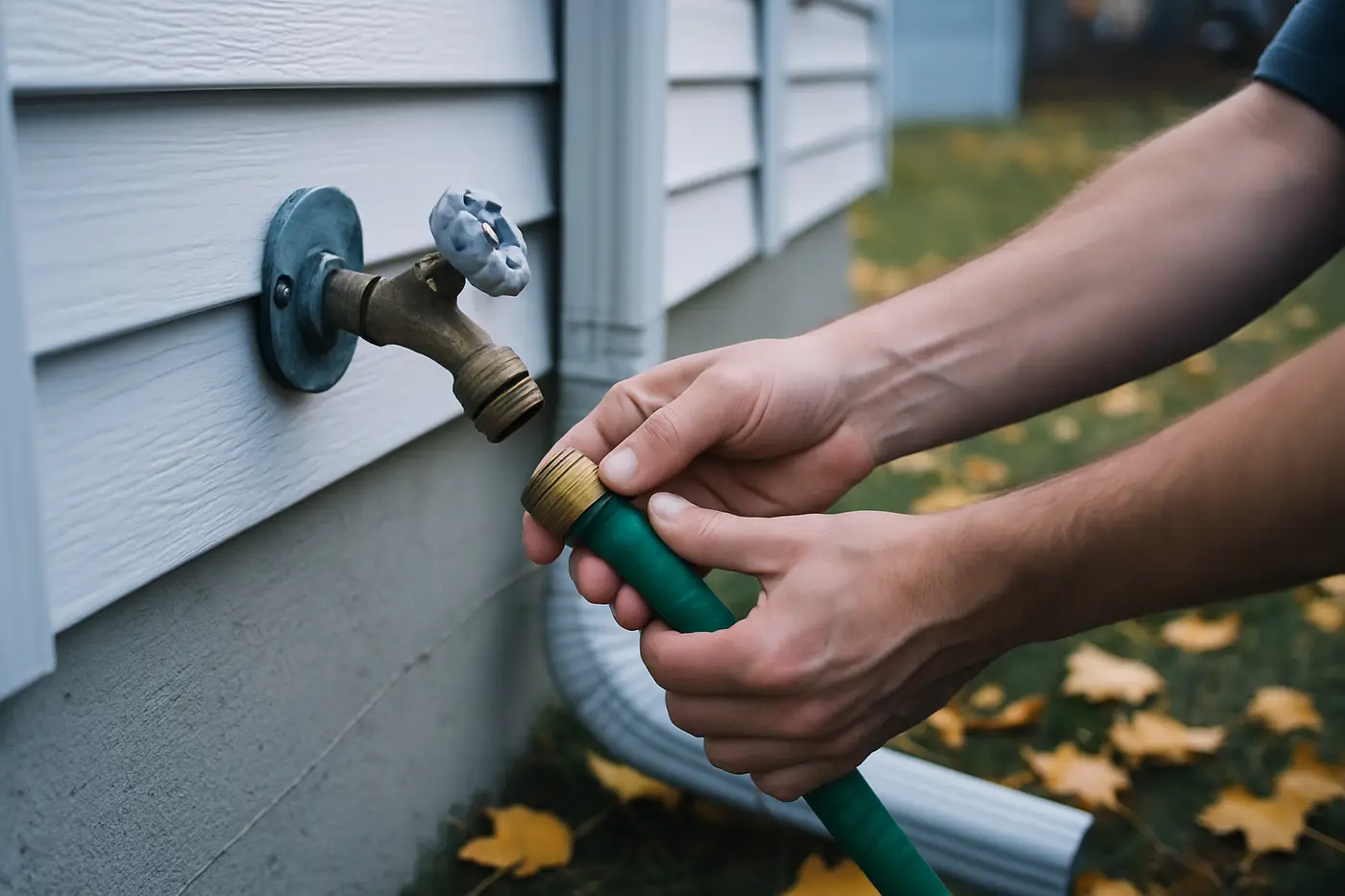
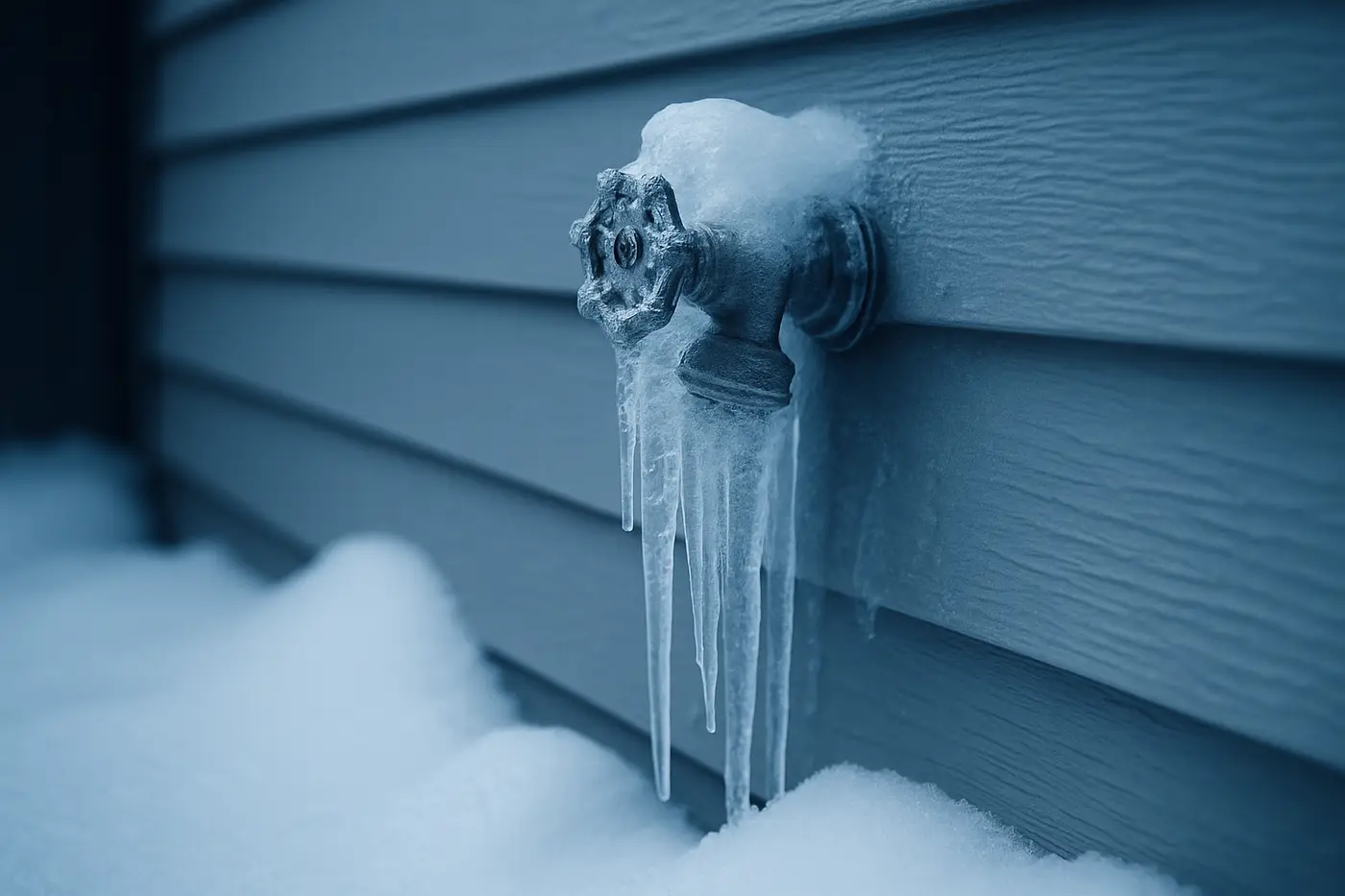
- Hose bibs. An outdoor tap left with a hose attached, or with the interior valve still open, can freeze and split the pipe inside the wall. You find out in spring when you turn it on.
- Near the meter. The meter and main shut-off are typically in the basement. If the basement is cold, a window is open or the meter sits against a cold foundation wall, it can freeze.
Frozen house pipe or frozen service line?
This is the first thing to figure out, because it changes who you call.
| What you see | Likely location | What to do |
|---|---|---|
| One fixture has no water, others run | House pipe on an exterior wall, crawlspace or garage | Open that tap, warm the cold section safely, call a plumber if it does not thaw |
| Several fixtures on one side of the house are dry | A shared branch line in a cold wall or crawlspace | Same as above, check the whole run for splits after it thaws |
| Every tap is dry, including the one nearest the meter | Meter or water service line | Report no water through 311 and call a plumber for the private side |
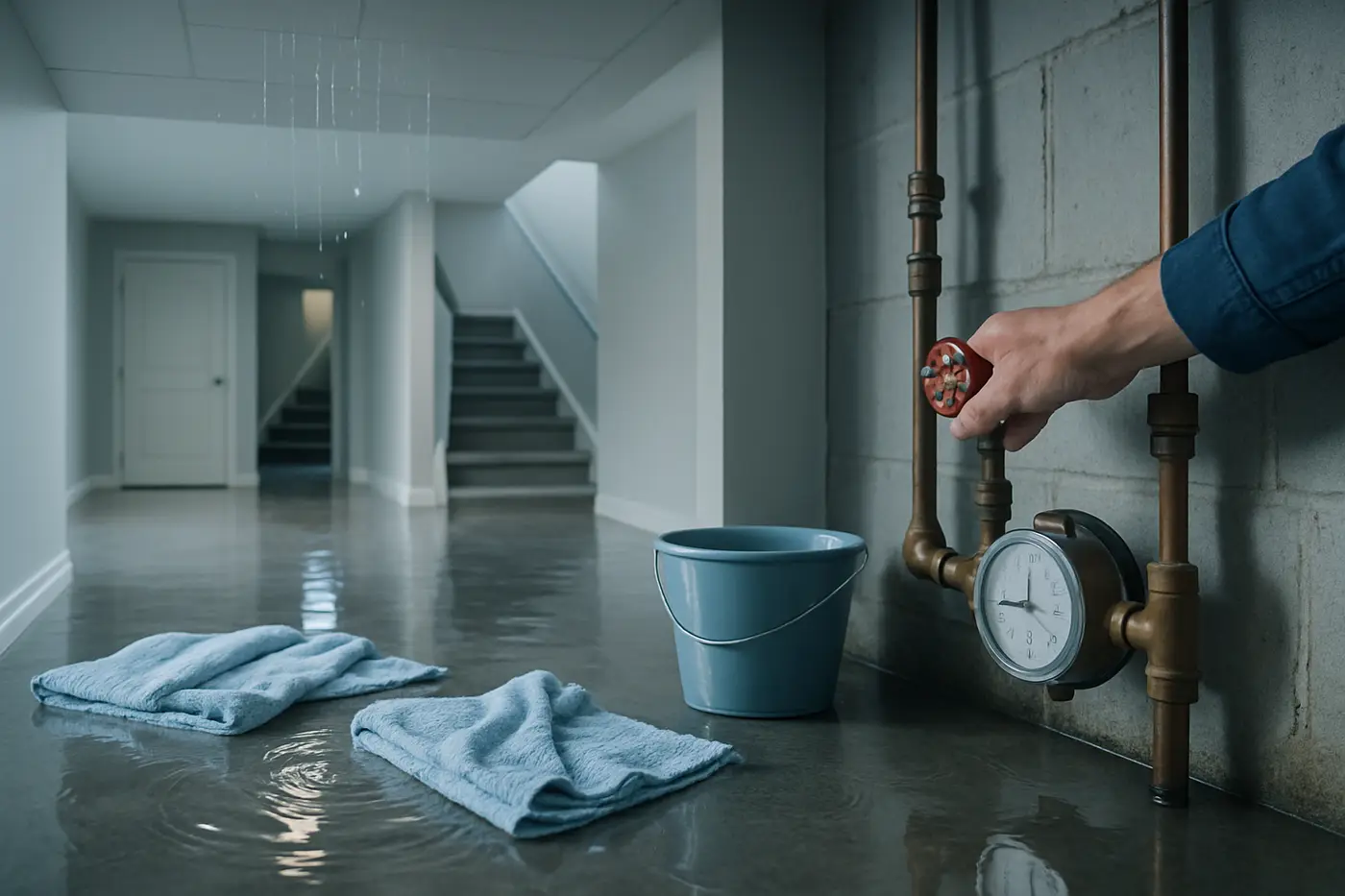
| Water returns but you hear hissing or see a wet ceiling | Pipe split during the freeze | Close the main shut-off and call a plumber |
The City owns the pipe from the water main to the property line. You own the pipe from the property line to the house, the main shut-off and everything inside. The meter belongs to the City, but protecting it from freezing is your job, and a frozen or damaged 15 mm meter is charged at $278.19 regular or $322.69 overtime/emergency in 2026.
Service lines are buried deep for exactly this reason. The City’s waterworks standard puts water mains and service pipes under 2.7 m of cover in clay and 3.3 m in gravel. When a service line does freeze, it is a serious job, and a service line that has to be dug up means excavation. See our water line repair page for what that involves.
How to thaw a frozen pipe safely
- Open the tap the frozen pipe feeds. Moving water helps thaw the rest of the ice and relieves pressure.
- Find the cold section. Feel along the pipe for the coldest spot, or look for frost on exposed pipe. Start with exterior walls, the crawlspace, the garage wall and the hose bib line.
- Warm from the tap end back. Work from the open tap toward the ice so melting water can escape.
- Use gentle heat only. A hair dryer, a space heater kept at a safe distance from walls, insulation and anything that can burn, or towels soaked in hot water. Open cabinet doors under sinks so warm room air reaches the pipes.
- Watch for leaks as the pipe thaws. If you see a drip or hear hissing, close the main shut-off in the basement and call a plumber.
Never use a torch, a lighter, a propane heater or any open flame on a pipe. Pipes run beside wood framing and insulation, and a flame in a wall cavity is how a frozen pipe becomes a house fire. Keep heat guns and any heat source away from gas lines. If you smell gas at any point, leave the building, do not use switches or phones inside, and call ATCO Gas or 9-1-1 from outside.
Keeping it from freezing again
A pipe that froze once will freeze again in the next cold snap unless something changes. Until a plumber can look at it, keep the cabinet doors under that sink open, keep the garage door closed, and set the thermostat so the house does not drop low overnight or while you are away. On the coldest nights, a thin, steady trickle from the tap on the problem line keeps water moving through it. The lasting fix is insulating the run, sealing where cold air gets at it, or rerouting the pipe to a warmer wall.
When to call a plumber
Call if you cannot find the frozen section, if the freeze is inside a finished wall or ceiling, if the whole house is dry, or if you see any sign of a split. Frozen pipe thawing without a burst typically runs $200 to $650 in Calgary in 2026, before GST. If the pipe has split, an accessible repair typically runs $275 to $1,200. Our frozen pipe repair page explains how we thaw and test, and our burst pipe repair page covers what happens when the ice has already done its damage.
Older bungalows, like many in Brentwood and elsewhere in NW Calgary, can have supply lines running through outside walls and crawlspaces with older insulation, and those runs are worth checking first when the temperature drops.
After it thaws: check again
The riskiest time is not the coldest night. It is the day the chinook arrives. Once water is flowing again, check every pipe you worried about, under sinks, along the crawlspace and behind the garage wall, for drips over the next day or two. If a pipe let go, read what to do when a pipe bursts. And before next winter, work through our fall winterization checklist so hose bibs, the garage and the crawlspace are ready.
FAQ
Common Questions
How do I thaw a frozen pipe safely?
Open the tap the frozen pipe feeds so melting water has somewhere to go. Then warm the pipe gently, starting at the section closest to the tap and working back toward the cold spot, with a hair dryer, a space heater set at a safe distance from anything that can burn, or towels soaked in hot water. Keep checking for drips as it thaws. Never use a torch, a lighter or any open flame, and never leave a heater running unattended in a crawlspace or garage.
How do I know if my water service line is frozen instead of a pipe in the house?
Check the tap nearest the water meter, usually in the basement next to the main shut-off. If that tap and every other fixture give nothing, the freeze may be at the meter or in the service line coming into the house, and you can report a no-water situation through 311. If the basement tap runs but one bathroom or the kitchen does not, the freeze is almost always in a house pipe on an exterior wall, in a crawlspace or near the garage.
What does the City charge for a frozen water meter?
The water meter is City property, but owners must protect it from freezing. In 2026 the City charges $278.19 for a frozen or damaged 15 mm meter during regular hours and $322.69 for overtime or emergency work. The simplest protection is keeping the area around the meter warm, not boxing it in behind insulation that separates it from the heated space, and never leaving a basement window near it open in winter. A space heater near a frozen meter is fine at a safe distance.
Why do pipes start leaking during a chinook?
Ice expands inside the pipe and can split copper or crack a fitting during the deep cold, but ice also plugs the split. Nothing leaks while the pipe stays frozen. When a chinook arrives and temperatures jump above freezing, the ice melts and water pressure pushes out through the split. That is why plumbers get a wave of leak calls when a cold snap breaks. After any deep freeze, check the pipes that were cold before and after they thaw.
How much does it cost to have a plumber thaw frozen pipes in Calgary?
Frozen pipe thawing with no burst typically runs $200 to $650 in Calgary in 2026, before GST. That covers a safe thaw and checking for splits. If the pipe has split, an accessible repair typically runs $275 to $1,200, and a repair that needs drywall or ceiling access runs $650 to $2,500. After-hours, weekend and holiday call-outs add $175 to $395. The final price is quoted in writing on site before work starts.
- #frozen-pipes
- #winter
- #chinook
- #water-meter
- #cold-snap