A failed part on a younger tank is usually worth repairing. A leaking tank body, or an older tank that keeps needing parts, usually is not. How to decide, and what Calgary's hard water has to do with it.
If your Calgary hot water tank has a failed part, such as a thermocouple, gas valve, element or temperature and pressure relief valve, and the tank itself is sound and not near the end of its life, repair it: typical repairs run $175–$650 before GST. If water is coming from the tank body, or the tank is near or past the usual lifespan of about 8–12 years and keeps needing parts, replace it: a 40–50 gallon gas tank typically costs $1,900–$3,800 installed. Calgary’s hard water pushes more tanks toward the replace side than people expect, because scale builds up inside them year after year. Here is how to make the call, and what permits and gas rules apply.
First: is this an emergency?
Most hot water problems can wait for business hours. A few cannot.
- Smell of gas near the tank: leave the building, do not touch lights, switches or appliances, and do not use a phone inside. Call ATCO Gas or 9-1-1 from outside. ATCO Gas handles gas emergencies in Calgary.
- Water pouring from the tank: shut off the cold water valve on the pipe into the top of the tank. If that valve will not close, shut the main water valve in the basement. On a gas tank, set the gas control to off or pilot; on an electric tank, switch off its breaker.
- T&P valve discharging steadily: the tank may be overheating. Turn the tank off and call a plumber. Do not cap or plug the discharge pipe.
- No hot water after a gas outage: ATCO’s guidance is not to relight appliances yourself after an outage.
No hot water on a Sunday night, with no leak and no gas smell, is inconvenient but usually not worth an after-hours call-out of $175–$395. Honest advice: book it for the morning unless there is water on the floor.
Calgary’s hard water and your tank
The City of Calgary describes its water as hard, mainly from calcium and magnesium. How hard depends on where you live:
| Treatment plant | Area served (general) | 2025 hardness as CaCO3 | Rough conversion* |
|---|---|---|---|
| Bearspaw (Bow River) | Generally the north of the city | 141–200 mg/L | About 8–12 grains per gallon |
| Glenmore (Elbow River) | Most of the south | 181–274 mg/L | About 11–16 grains per gallon |
*Grains per gallon are our rough conversion from the City’s mg/L figures, not City numbers.
Hardness is lowest during spring runoff and highest from December to February. So a house in NW Calgary on Bearspaw water generally sees less scale than one in SE Calgary on mostly Glenmore water, though both are hard.
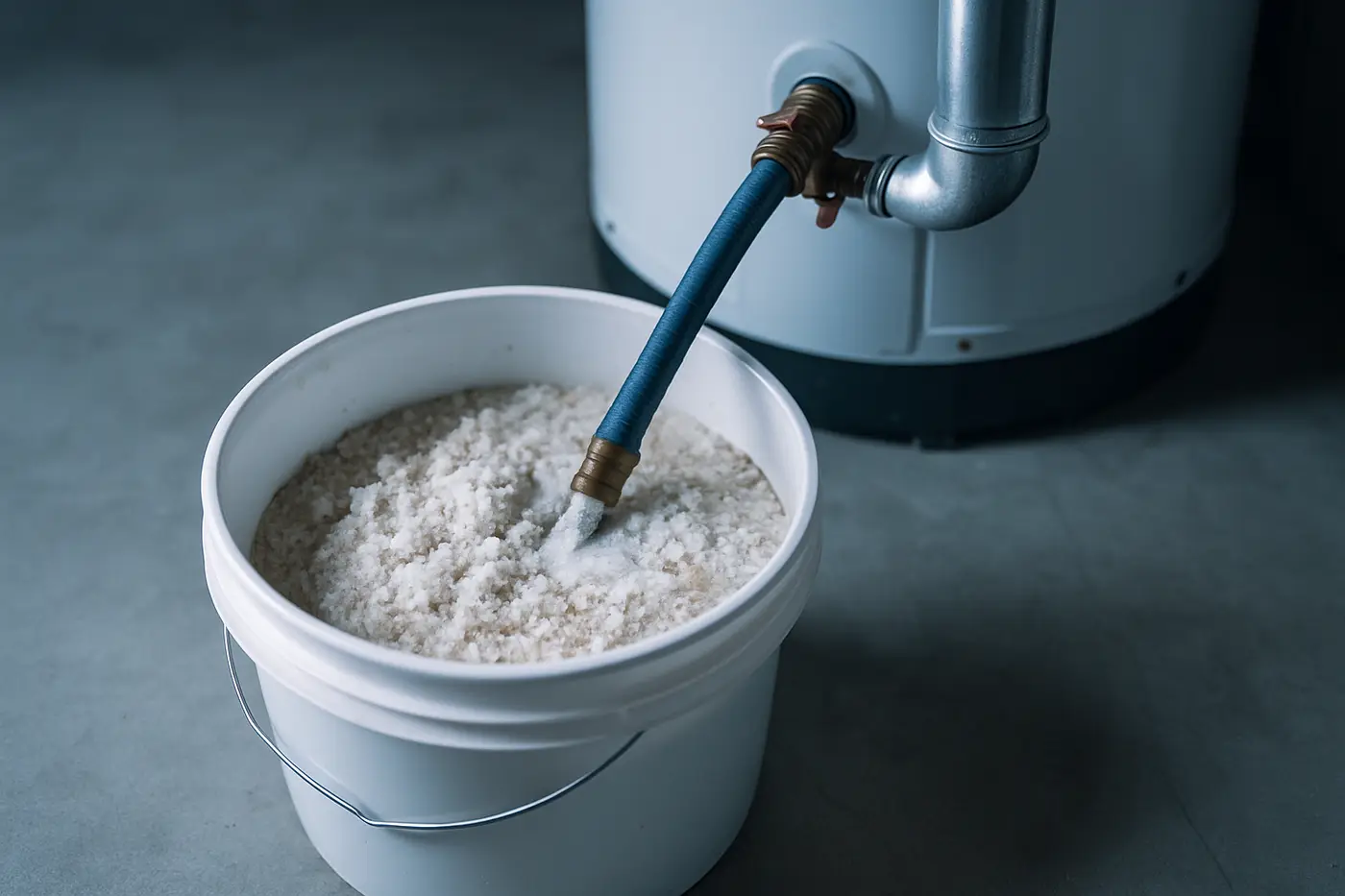
What hard water does to a tank is well known in the trade. Calcium settles as scale on the bottom of a gas tank and around the elements of an electric one. On a gas tank you hear it as popping or rumbling when the burner runs. Scale insulates the water from the burner, so the tank works harder, and it can shorten the tank’s life. The same scale builds up in tankless heat exchangers, aerators and shower valves.
How long a tank lasts
The industry figure for a standard tank is typically about 8–12 years. That is a general figure, not a Calgary measurement, and a tank that has been flushed and had its anode checked can outlast one that has been ignored. To find your tank’s age, look at the label on its side; the manufacture date or a date code is printed there.
Repair or replace: the decision
| Situation | Usually | Why |
|---|---|---|
| Pilot will not stay lit, tank under about 8 years | Repair | Thermocouple or gas valve is a part, not the tank |
| Electric tank lukewarm, tank sound | Repair | Element or thermostat replacement |
| T&P valve dripping, tank otherwise fine | Repair | Replace the valve, then check temperature and pressure |
| Leak at a fitting or the drain valve | Repair | Fittings can be replaced |
| Water coming from the tank body or under the jacket | Replace | Inner tank has failed; it cannot be patched |
| Rust-coloured hot water, tank near or past 8–12 years | Replace, usually | Suggests the tank is corroding inside |
| Heavy popping, slow recovery, older tank, repeated repairs | Replace | Scale and age; repairs are buying little time |
Typical Calgary ranges, before GST, quoted on site in writing before work starts:
- Service call or diagnostic, business hours: $99–$199, often credited toward the repair.
- Hot water tank repair (thermocouple, gas valve, element, T&P valve): $175–$650.
- Hot water tank replacement (40–50 gal gas): $1,900–$3,800, including disposal, plus a permit if gas or venting changes.
- Tankless water heater installation: $3,800–$7,500, depending on gas line and venting.
A useful rule: if a repair on an older tank costs a meaningful share of a replacement, put the money toward the new tank. Our hot water tank repair page covers the common repairs in detail.
Permits: when replacement needs one
The City of Calgary says a permit is needed for hot water tanks in some situations: changes to the gas line upstream of the tank’s shut-off valve, changes to the venting, or a change in the type of heater, for example natural draft to direct vent. So a permit may be required depending on the work. A like-for-like swap with no gas or venting changes may not need one; switching to a tankless unit usually involves gas and venting changes.
To pull permits, a business needs a City Contractor business licence and registration as a City Qualified Tradesperson. Gas work is done by Alberta-certified gasfitters. A homeowner can get a gas permit only if they are an Alberta-certified journeyman gasfitter working on their own single-family home.
Gas code and venting changes in 2026
Gas installations in Alberta now follow CSA B149.1:25, in force since March 1, 2026. One point matters for tank replacements: under a City advisory dated September 18, 2026, when a gas appliance is replaced and the existing ABS venting is no longer approved for the new appliance, the vent must be replaced. If your current tank vents through plastic pipe, ask your gasfitter whether the vent is approved for the new unit, and make sure any vent replacement is in the written quote rather than a surprise on the day. Our gas fitting page explains gas work and permits.
Tankless: worth it in Calgary?
Tankless heaters save space and do not run out of hot water, but they cost more to install, $3,800–$7,500 before GST, because the gas line and venting usually change. In Calgary’s hard water, the heat exchanger needs periodic descaling to keep performing, so budget for maintenance. For a household happy with its current tank, a like-for-like replacement is usually the simpler and cheaper choice.
Look after the T&P valve
The temperature and pressure relief valve is the tank’s last line of safety. It opens if the water gets too hot or the pressure too high, and sends water down the discharge pipe toward the floor. Never cap, plug or remove that pipe, and never store things where they block it. A valve that drips or discharges is telling you something: either the valve is worn or the tank is overheating. Replacing a T&P valve falls within the typical $175–$650 repair range, and it is not a job to put off.
Keep it going longer
Flush sediment from the tank once a year, especially on Glenmore water, where hardness runs higher. Have the anode rod checked, since it is the part designed to corrode so the tank does not. Keep the area around a gas tank clear of boxes, paint cans and laundry so it gets combustion air and the burner is easy to see. Make sure the cold water valve on the tank turns, so you can shut the tank off quickly if it ever leaks. If the tank sits on a finished floor, a drain pan under it limits the damage from a slow leak. The flush fits neatly alongside the other jobs on our fall plumbing checklist.
FAQ
Common Questions
How long does a hot water tank last in Calgary?
The common industry figure for a standard tank is typically about 8–12 years. That is a general guide, not a Calgary-specific number. Calgary's water is hard, and hard water leaves scale in the bottom of the tank, which can shorten its life if the tank is never flushed. Look for the manufacture date on the label on the side of the tank. A tank near or past that range that starts leaking or needing parts is usually a replacement, not a repair.
Is it worth repairing a leaking hot water tank?
It depends on where the leak is. A leak at a fitting, a drain valve or the temperature and pressure relief valve can usually be repaired, and typical Calgary hot water tank repairs run $175–$650 before GST. Water coming from the tank itself, from under the jacket or pooling under the base with no other source, usually means the inner tank has failed. That cannot be repaired, so the tank needs replacing. Shut off the cold water supply to the tank until it is looked at.
Do I need a permit to replace a hot water tank in Calgary?
A permit may be required depending on the work. The City of Calgary says a permit is needed in some situations: changes to the gas line upstream of the tank's shut-off valve, changes to the venting, or changing the type of heater, for example from natural draft to direct vent. Your gasfitter should tell you before the job starts whether a permit applies to your installation, and include it in the written quote if it does.
My pilot light went out after a gas outage. Can I relight it?
ATCO's guidance is that after a gas outage you should not relight appliances yourself. Contact ATCO Gas or a certified gasfitter to restore service safely. If at any point you smell rotten eggs indoors, leave the building immediately, do not touch lights, switches or appliances and do not use a phone inside, then call ATCO Gas or 9-1-1 from outside. A pilot that keeps going out on its own, with no outage, usually points to a failing thermocouple or gas valve.
What does a tankless water heater cost to install in Calgary?
A tankless water heater installation typically costs $3,800–$7,500 in Calgary before GST. The range is wide because the gas line and venting vary from house to house: a tankless unit often needs a larger gas supply and different venting from the tank it replaces. Changing the type of heater and the venting can mean a permit is required. Calgary's hard water also matters, because scale builds up in the heat exchanger, so a tankless unit needs periodic descaling.
Why is water coming out of the pipe on the side of my tank?
That pipe is the discharge line from the temperature and pressure relief valve, often called the T&P valve. It opens to release water if the temperature or pressure in the tank gets too high, which protects the tank from failing dangerously. A valve that drips or discharges needs attention, either because the valve has worn out or because the tank is overheating or over-pressurizing. Never cap, plug or remove that discharge pipe. Turn the tank down or off and call a plumber.
- #hot water tank
- #water heater
- #hard water
- #tankless
- #calgary