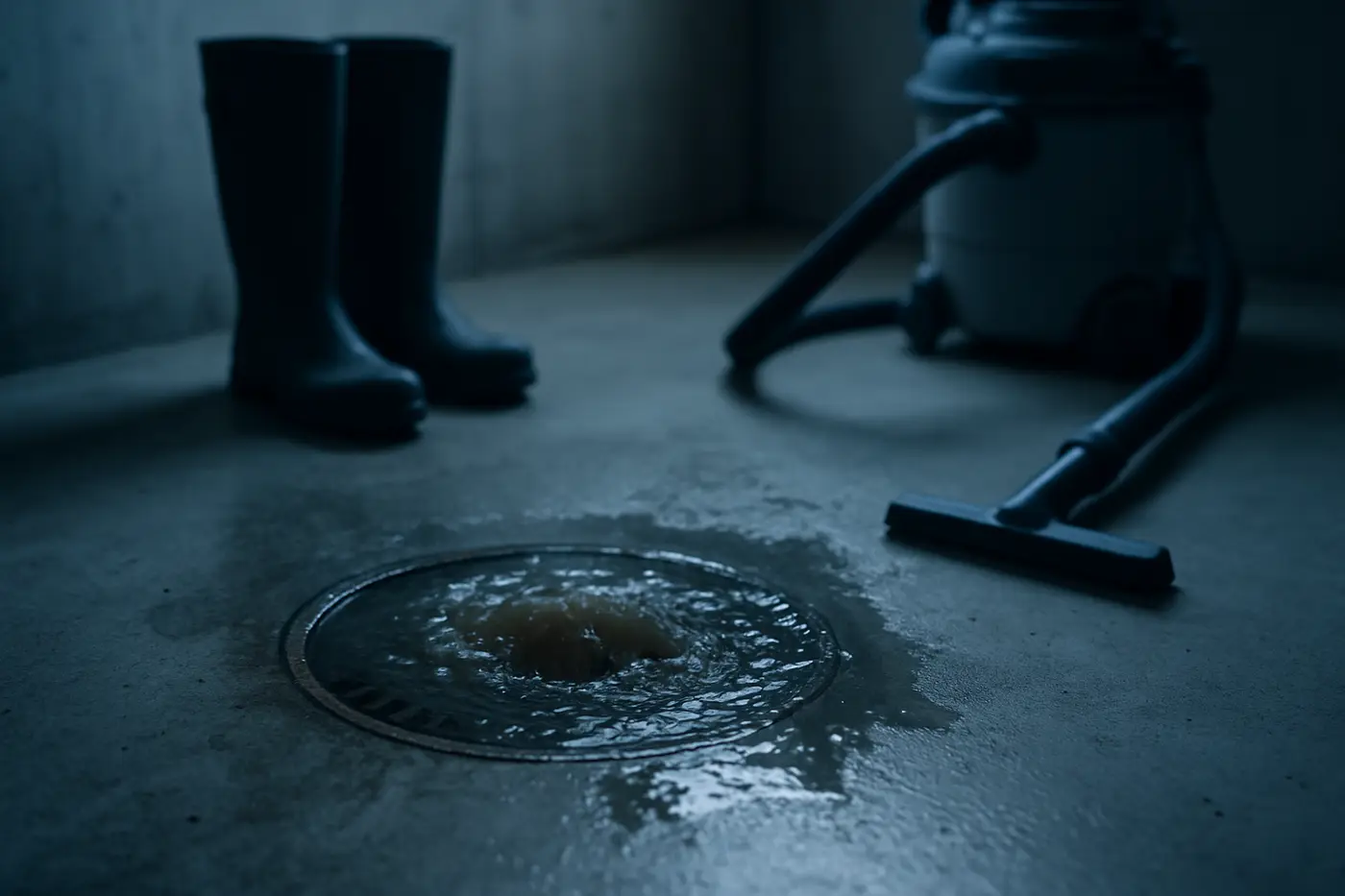
Sewage at the floor drain means the line is blocked somewhere between your house and the City main. Here is what to do first, who owns which part of the pipe, what clearing costs and how insurance treats it.
If sewage is coming up your basement floor drain in Calgary, stop using every toilet, sink, shower and appliance that drains, keep people and pets away from the water, and call 311 first. The City sends a crew to snake the line toward the main and find out whether the blockage is on the public side or on your private side. If it is the City’s section, the City deals with it. If it is private, the City’s advice is to call a plumber, and the clearing, camera inspection and any repair are yours to pay for. This guide walks through that sequence, what things cost, and how to stop it happening again.
Why the floor drain is where it shows up
Every drain in a house runs downhill to one building sewer that leaves through the basement wall and heads out to the property line and the City main. When that line is blocked, the water you use upstairs has nowhere to go. It backs up until it finds the lowest opening in the house, and in most Calgary homes that is the basement floor drain, often in the furnace room next to the hot water tank. A basement toilet or shower can overflow the same way.
What comes up tells you something. Grey water that appears when the washing machine drains usually points to a blockage in your own line. Sewage that keeps rising when nobody upstairs is using water can mean the problem is further out, possibly at the main. You cannot tell for certain from inside the house, which is exactly why the City check comes first.
Safety first: contaminated water and electricity
Sewage carries bacteria. Treat the water, and anything it has soaked, as contaminated.
- Keep children and pets out of the basement.
- Wear waterproof boots and gloves if you have to go down, and wash your hands well afterwards.
- Do not walk into standing water that could reach outlets, extension cords, a furnace, a freezer or a panel. If water is near electrical equipment, stay out until the power to that area has been made safe by a qualified person.
- Do not try to plunge a floor drain that is already full of sewage. You will only push more of it around the floor.
- Open a window if the smell is strong.
If you also smell gas, that is a separate emergency: leave the building, do not touch switches or use a phone inside, and call ATCO Gas or 9-1-1 from outside.
Step one: stop adding water
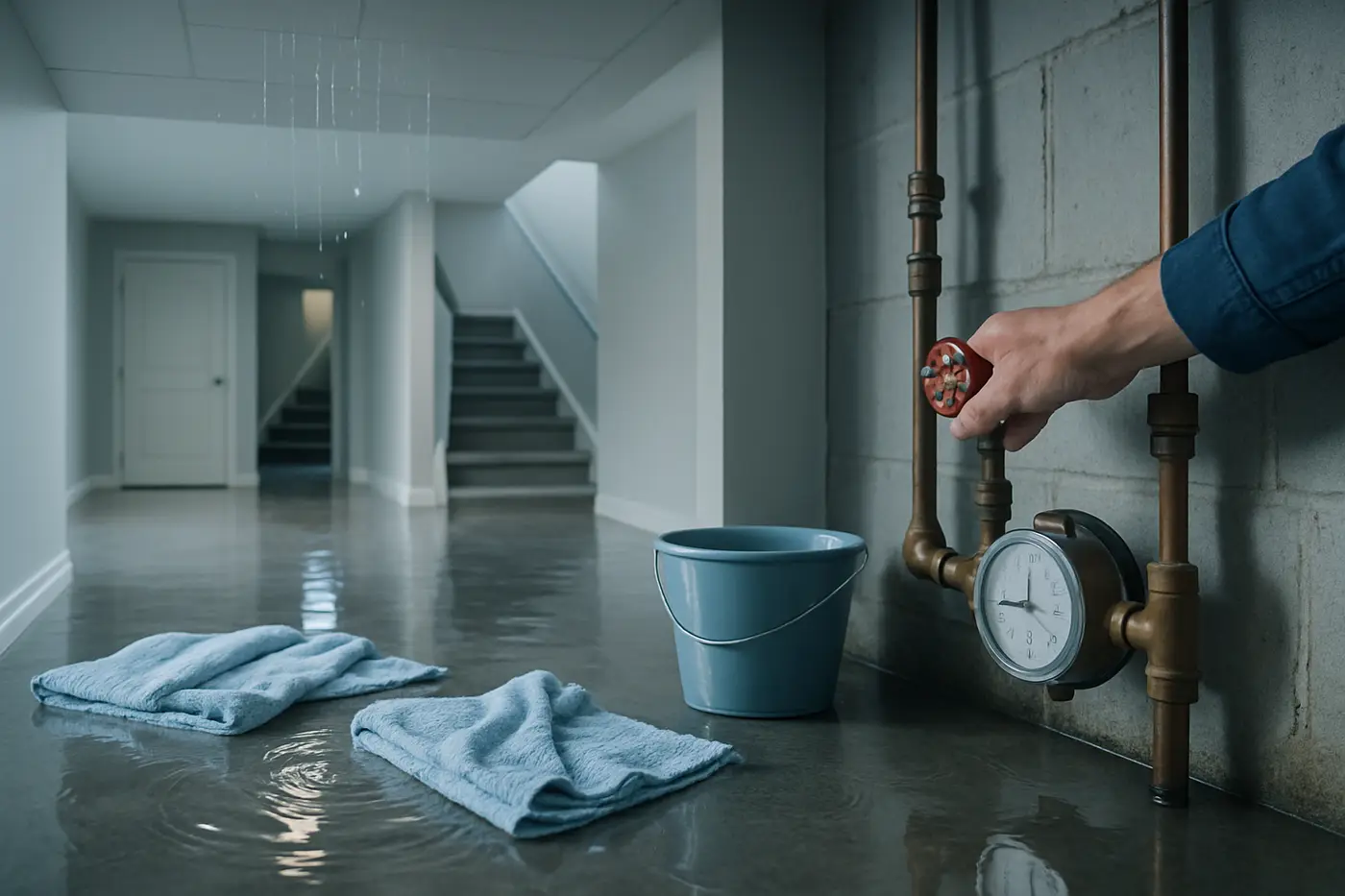
This is the step people forget. Tell everyone in the house: no flushing, no showers, no dishwasher, no laundry. Every litre you send down the drain ends up on the basement floor. If you have a tenant in a basement or upstairs suite, tell them too, because their drains feed the same line in most houses. Shutting off the main water valve in the basement is a reliable way to stop anyone using water by accident until the line is clear.
Call 311 before you call a plumber
For a sewer backup, the City of Calgary says to call 311 first. A City crew will come out and snake toward the main to find out whether the blockage is in the public section or in your private line. If the blockage is on the City side, the City looks after it. If it is private, the City will tell you so, and at that point you call a plumber.
This order saves money. If you call a plumber first and the problem turns out to be in the City main, you have paid for a call-out that could not fix it. If the City confirms the blockage is private, your plumber arrives knowing where to start.
Who owns what: the property line split
Calgary’s sewer service splits at the property line. Under the Wastewater Bylaw (14M2012), the owner provides and owns the wastewater connection from the property line to the house plumbing. The City owns the public section beyond that.
In practice that means the pipe under your basement floor, the line under your yard and everything up to the property line is your responsibility. Tree roots getting into that section, a sag in an old clay line, grease built up over years, or a collapsed joint are all private repairs.
The City has recognized that roots and backups are a particular problem in older communities. It runs a Sanitary Lateral Lining pilot that relines City sanitary service lines from manholes, without digging, to deal with tree roots and backups. That work is on the City’s section of the line, not the private pipe inside your property line.
What a plumber does on a private blockage
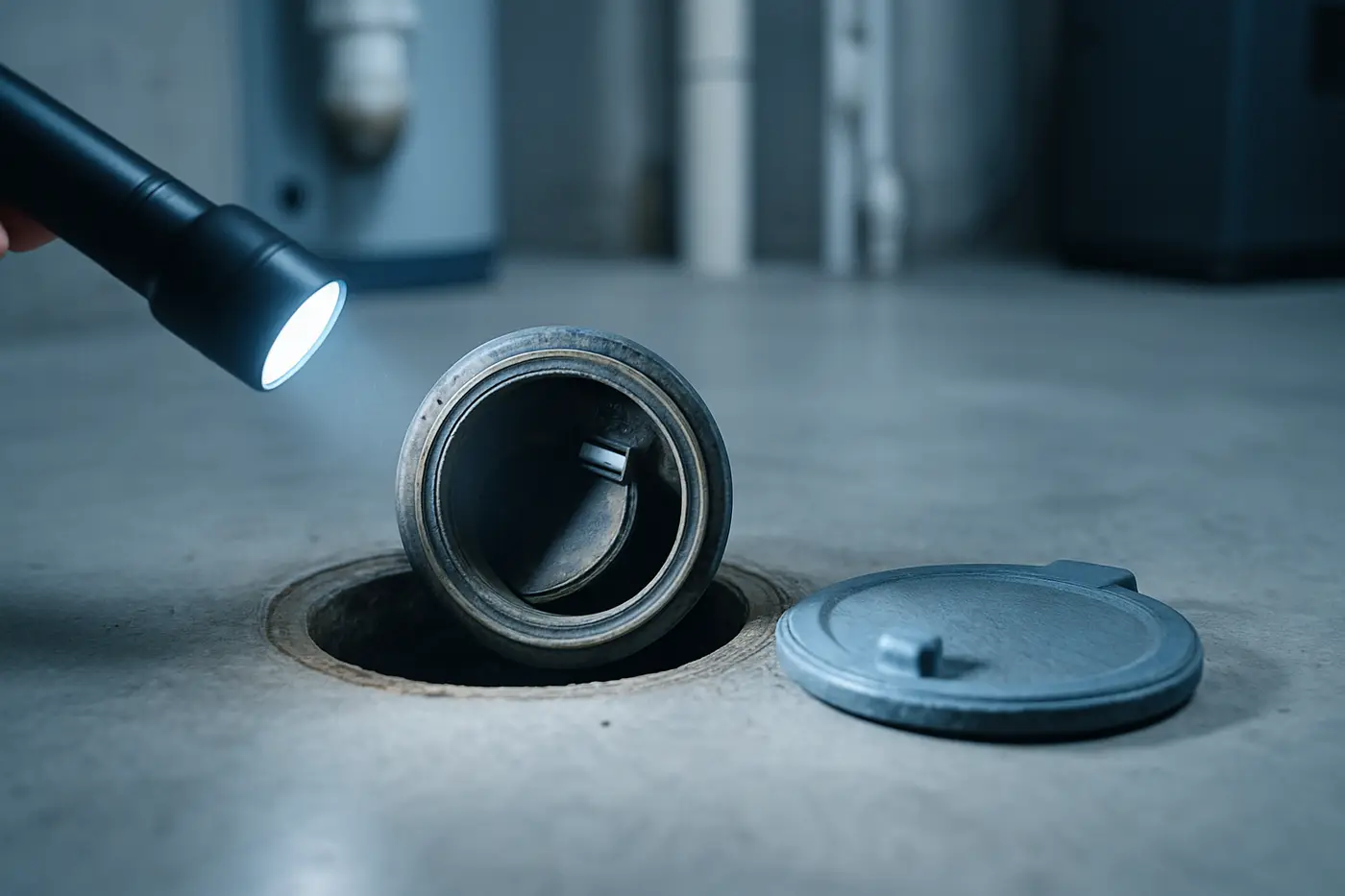
Once the City has confirmed the blockage is private, a plumber usually works through the building’s cleanout, the capped fitting on the main drain in the basement. The usual sequence is: clear the line with a cable machine, run a camera to see what caused it, and then decide whether it needs jetting, a spot repair or nothing more. Our emergency drain cleaning and sewer line repair pages explain each step in more detail.
| Work | Typical Calgary range (before GST) | Notes |
|---|---|---|
| After-hours, weekend or holiday call-out | $175–$395 | Explained on the phone before dispatch |
| Main sewer line clearing (through cleanout) | $250–$650 | Cable machine through the cleanout |
| Hot water jetting / hydro jetting | $450–$1,100 | Grease, scale, roots |
| Sewer camera inspection | $250–$550 | Often credited toward a repair |
| Sewer line spot repair (private side) | $2,500–$7,500 | Excavation, section replacement, permit |
| Sewer line replacement (private side) | $9,000–$30,000+ | Length, depth, trenchless vs open trench |
These are typical ranges; the final price is quoted on site in writing before work starts. Clearing a drain blockage does not need a permit. Replacing a sewer line does, and so does installing a backwater valve.
A camera inspection after the line is running again is worth the money if this is not the first backup. Roots that were cut back will grow again, and a camera shows whether you are looking at a maintenance problem or a broken pipe.
Backwater valves and sump pumps: stopping the next one
The City’s guide says Alberta’s plumbing code requires any fixture below grade to be protected from sewer backup from the street, including floor drains and basement bathrooms. The two options are one full-port backwater valve on the main sewer, or individual valves on the branches that serve basement fixtures. A full-port valve needs servicing every year; branch valves do not. Installing a backwater valve needs a plumbing permit.
A backwater valve protects against sewage coming back from the street. It does not stop a blockage inside your own line from overflowing at the floor drain, and a neglected valve that sticks can cause its own backup. Our backwater valve guide covers who needs one and what it costs, and the backwater valve service page explains a retrofit.
Sump pumps are a separate system. A sump pit collects groundwater from the weeping tile around your foundation, not sewage. The City’s advice is a backup pump with battery or generator power, a check valve on the discharge, a high-water alarm, and replacing the pump every 10 years or sooner. The City says to discharge two metres from the foundation, and the water must not run back into the weeping tile or onto a neighbour’s property, the lane, the sidewalk or the street. Sump maintenance is the homeowner’s job, and the City does not respond to sump pump calls.
Insurance: sewer backup is optional coverage
Standard Canadian home policies typically cover sudden and accidental water damage from indoor plumbing, such as a burst pipe. Sewer backup is different. According to the Insurance Bureau of Canada, it is typically not covered by a standard policy, and most insurers offer it as optional coverage. The City of Calgary says the same: sewer backup, overland water and groundwater are optional add-ons.
If you have the coverage, help your claim:
- Take photos and video of the water, the drain and the damage before cleanup.
- Keep anything the plumber pulls out of the line, such as roots or a broken piece of pipe.
- Ask for a written plumber’s report stating where the blockage was and what caused it.
- Keep the 311 details and what the City crew told you.
Older river communities and the 2013 flood
Calgary homeowners near the Bow and Elbow remember June 2013. On June 20 and 21, 26 neighbourhoods near the two rivers were under mandatory evacuation, affecting about 75,000 people, the largest evacuation in the city’s history. Communities such as Mission, Inglewood and Hillhurst-Sunnyside were among them.
A river flood is overland water, which insurers treat separately from a sewer backup. The link for plumbing is the housing: many of these communities in the City Centre have older homes with older sewer laterals, mature trees and finished basements added over the years. If your home is one of them, a camera inspection of the private line and a check on your backwater protection are sensible daytime jobs, done before the next backup rather than after it.
After the line is clear
Once the water drains away, run a little water upstairs and watch the floor drain before you go back to normal use. Pull out wet carpet and underlay, since these rarely recover from sewage, and get air moving. Book the camera inspection, and if the cause was roots or a failing pipe, get a written quote for the repair so you can plan it at business-hours rates instead of waiting for the next time the drain fills up.
FAQ
Common Questions
Who do I call first when sewage comes up my floor drain in Calgary?
Call 311 first. The City sends a crew to snake the sewer service toward the main so it can tell whether the blockage is in the public section or on your private side. If the problem is on the City side, the City handles it. If the crew finds the blockage is private, the City's advice is to call a plumber. Meanwhile, stop using every toilet, sink, shower, dishwasher and washing machine in the house so you are not adding water to a line that has nowhere to go.
Who pays to fix a blocked sewer line in Calgary?
Ownership splits at the property line. Under the City's Wastewater Bylaw, the owner provides and owns the wastewater connection from the property line to the house plumbing, so clearing, camera work and repairs on that private section are the owner's cost. The City looks after the public side. That is why the 311 call matters: it tells you which side the blockage is on before anyone starts billing. Typical Calgary ranges for private work are in the cost table in this guide, GST extra.
Does home insurance cover a sewer backup in Calgary?
Not under a standard policy. The Insurance Bureau of Canada says sewer backup is typically not covered by a standard home policy, and most insurers offer it as optional coverage. The City of Calgary says the same thing: sewer backup, overland water and groundwater are optional add-ons. Check your policy wording before you need it. If you do have the coverage, take photos, keep anything the plumber removes from the line and ask for a written report of what caused the backup.
Is it safe to clean up sewage in my basement myself?
Treat sewage water as contaminated. Keep children and pets out, wear waterproof boots and gloves, and do not touch your face while working. Never walk into standing water that could reach outlets, extension cords, a furnace or other electrical equipment until the power to that area has been made safe by a qualified person. Porous items that sat in sewage, such as carpet and underlay, usually cannot be saved. If the backup is large, your insurer may send a restoration company.
Will a backwater valve stop sewage coming up my floor drain?
A backwater valve is designed to stop sewage from the street pushing back into your basement. The City's guide says Alberta's plumbing code requires any fixture below grade to be protected from sewer backup from the street, either with one full-port valve on the main sewer or with valves on individual branches. A valve does not help if the blockage is in your own line between the house and the valve, and full-port valves need servicing every year.
What does a Calgary plumber charge to clear a main sewer line?
Typical Calgary ranges are $250–$650 to clear a main sewer line through a cleanout, $450–$1,100 for hot water jetting when grease, scale or roots are the problem, and $250–$550 for a sewer camera inspection, which is often credited toward a repair. Outside business hours, an after-hours call-out usually runs $175–$395 on top. All prices are before GST, and the final price is quoted on site in writing before work starts.
- #sewer backup
- #floor drain
- #basement flooding
- #backwater valve
- #calgary