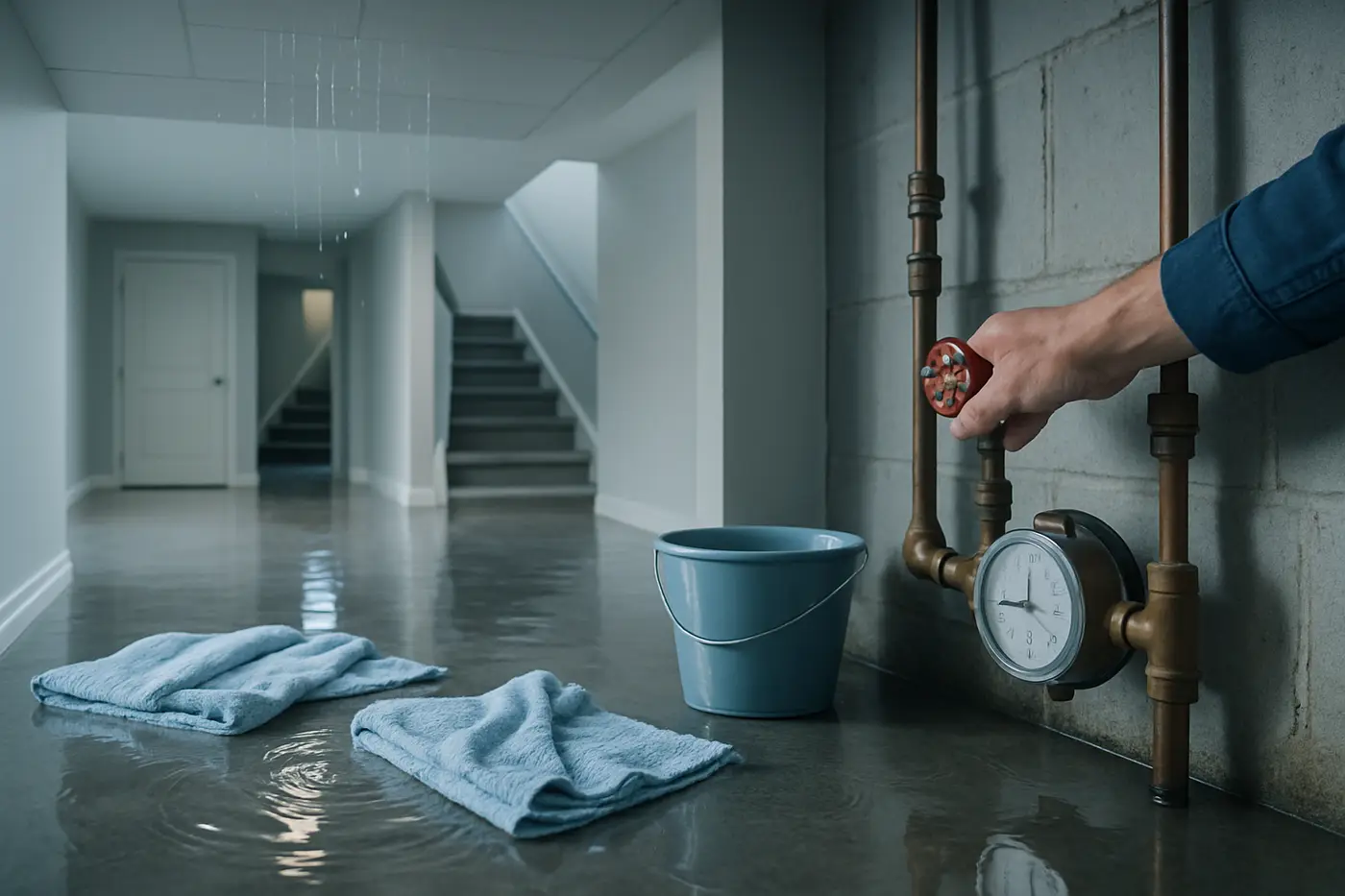
When a pipe bursts in a Calgary home, close the main shut-off next to the water meter in the basement, keep away from wet outlets and the panel, drain the lines, then photograph everything before cleanup.
When a pipe bursts in your Calgary home, the first move is to stop the water: go to the basement and close the main shut-off valve, which in most Calgary houses sits next to the water meter where the service line comes in. Then keep away from water near outlets, cords or the electrical panel, open the lowest taps in the house to drain the lines, turn the hot water tank down or off, and photograph everything before you start cleaning up. Call a plumber once the water is off. If water is coming up in the street or the boulevard rather than inside your house, that is the City’s side, and you report it through 311.
Below is the same sequence in more detail, plus what it costs, what insurance usually does, and why so many Calgary pipes burst on the day it warms up.
Step 1: Shut off the water at the main
Every minute the water runs, it spreads further under flooring and into walls. Go straight to the basement. The main shut-off is normally on the incoming pipe right beside the water meter, often in the furnace room, a utility corner or under the stairs.
- Round handle (gate valve): turn clockwise until it stops. Older gate valves can be stiff, so use steady pressure, not a wrench on the handle.
- Lever (ball valve): turn a quarter turn so the lever sits across the pipe.
If only one fixture is involved, such as a toilet supply line or the lines under a sink, the fixture stop valve may be enough. When in doubt, close the main.
If the main will not close, close what you can and call a plumber. Do not try to operate the City service valve (the curb stop) near the property line. It is City property even when it sits on your land. Owners or certified plumbers can book a City turn-off, which in 2026 costs $57.22 for a single service in regular hours (8 a.m. to 4 p.m.), $101.72 outside those hours or within 24 hours, and $178.00 for an emergency off-and-on in one appointment.
Step 2: Make it safe
Water and electricity are the real danger in the first few minutes.
- Do not walk through standing water if it is near outlets, extension cords, a space heater or the electrical panel.
- If you can reach the panel from a dry spot, switch off the circuits for the wet area. If you cannot reach it safely, leave it alone and stay out of that area.
- Unplug nothing while standing in water.
- If water is coming through a ceiling light or the ceiling is sagging, keep everyone out of the room below.
If you smell gas at any point, for example because water has reached a gas appliance, leave the building first. Do not use switches or phones inside. Call ATCO Gas or 9-1-1 from outside, and have a gasfitter deal with the house side once it is safe.
Step 3: Drain the lines and deal with the hot water tank
With the main closed, open the lowest taps in the house, such as a basement sink or laundry tub, and then a tap upstairs to let air in. That empties the pipes so less water comes out of the break. For the hot water tank, set a gas tank to its pilot or vacation setting, or switch off the breaker for an electric tank, so it does not heat while it is being drained or empty.
Step 4: Contain the water
Move furniture, boxes and electronics out of the way. Use towels, buckets and a wet vacuum if you have one. Check the floor drain in the basement is clear so water can reach it. In a condo, tell building management right away, because leaks travel between floors through shared walls and risers, which is common in the towers of the Beltline and downtown.
Step 5: Document for insurance
Before anything is cleaned up or thrown out:
- Take photos and video of the break, the water, and every damaged area and item.
- Keep the failed piece of pipe or fitting after the plumber cuts it out.
- Ask the plumber for a written report on what failed and why.
Standard Canadian home policies typically cover sudden and accidental water damage from indoor plumbing, which is what a burst pipe usually is. Call your insurer or broker early. Sewer backup is a different coverage and is typically optional.
Step 6: Call a plumber
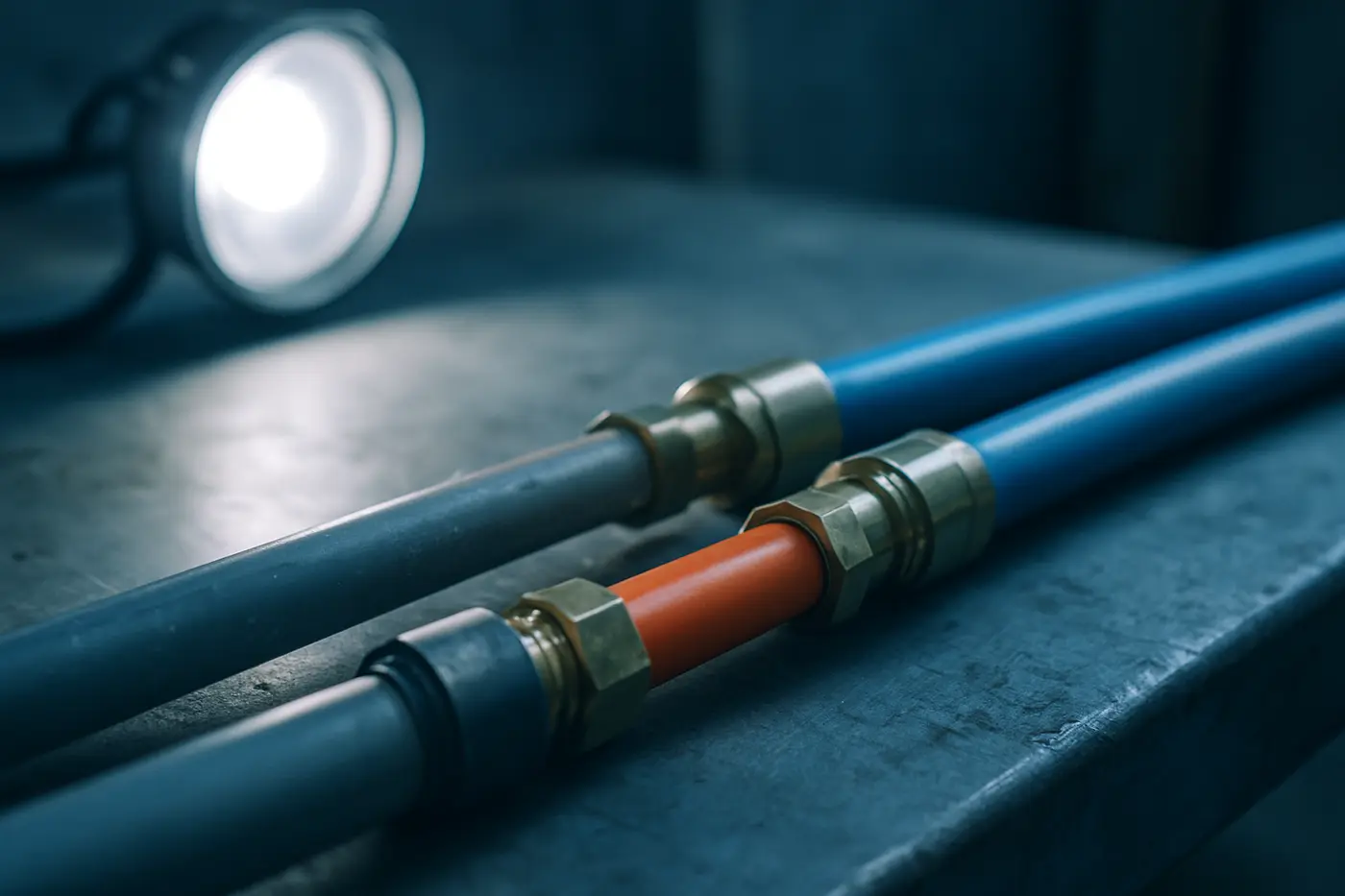
Tell the person who answers what burst, where, what the pipe looks like (copper, white or coloured PEX, grey Poly-B) and whether the water is off. With the main closed, some repairs can wait for business hours if the household can manage without water. If you cannot stop the water, it cannot wait. Our burst pipe repair page and 24 hour plumber page explain what happens when we come out.
What not to do
- Do not turn the water back on to “see where it is coming from”. You already know enough to close the main, and a plumber can pressure test once the break is repaired.
- Do not tape or clamp a split and go back to bed with the main open. Temporary clamps can hold for a while, then let go when you are asleep or away.
- Do not cut into walls or ceilings to hunt for the leak unless water is pooling above you and needs a drain point. Open drywall only where you have to, because every extra hole is more patching later.
- Do not throw out the damaged pipe, carpet or belongings before your insurer has seen photos of them.
City side or house side?
| Where the water is | Whose pipe | What to do |
|---|---|---|
| Inside the house, anywhere after the main shut-off | Yours | Close the main, call a plumber |
| At the meter or main shut-off itself | Meter is City property; the shut-off valve is yours | Close what you can, call a plumber, who can arrange a City turn-off if needed |
| In your yard, between the house and the property line | Yours (private service line) | Call a plumber; the City gives 15 days before it may issue a remedial order |
| On the street, boulevard or coming up through pavement | The City’s | Report it through 311 |
The City owns the pipe from the water main to the property line and the curb stop. You own the pipe from the property line to the house and the main shut-off inside. For a private-side leak, you hire the contractor, the contractor gets the permits and digs its own trench. Because Calgary service lines are buried under 2.7 m of cover in clay and 3.3 m in gravel, that is not a small hole. See water line repair for what the job involves.
What burst pipe repairs cost in Calgary
Typical 2026 Calgary ranges, before GST:
- Burst or leaking pipe repair (accessible): $275 to $1,200.
- Burst pipe with drywall or ceiling access: $650 to $2,500, access and patch, not paint.
- Leak detection if the source is hidden: $300 to $700.
- After-hours, weekend or holiday call-out: $175 to $395.
- Water service line repair (private side): $2,500 to $8,000.
The final price is quoted on site, in writing, before work starts. For the full breakdown, read how much an emergency plumber costs in Calgary.
Why winter bursts show up on the thaw
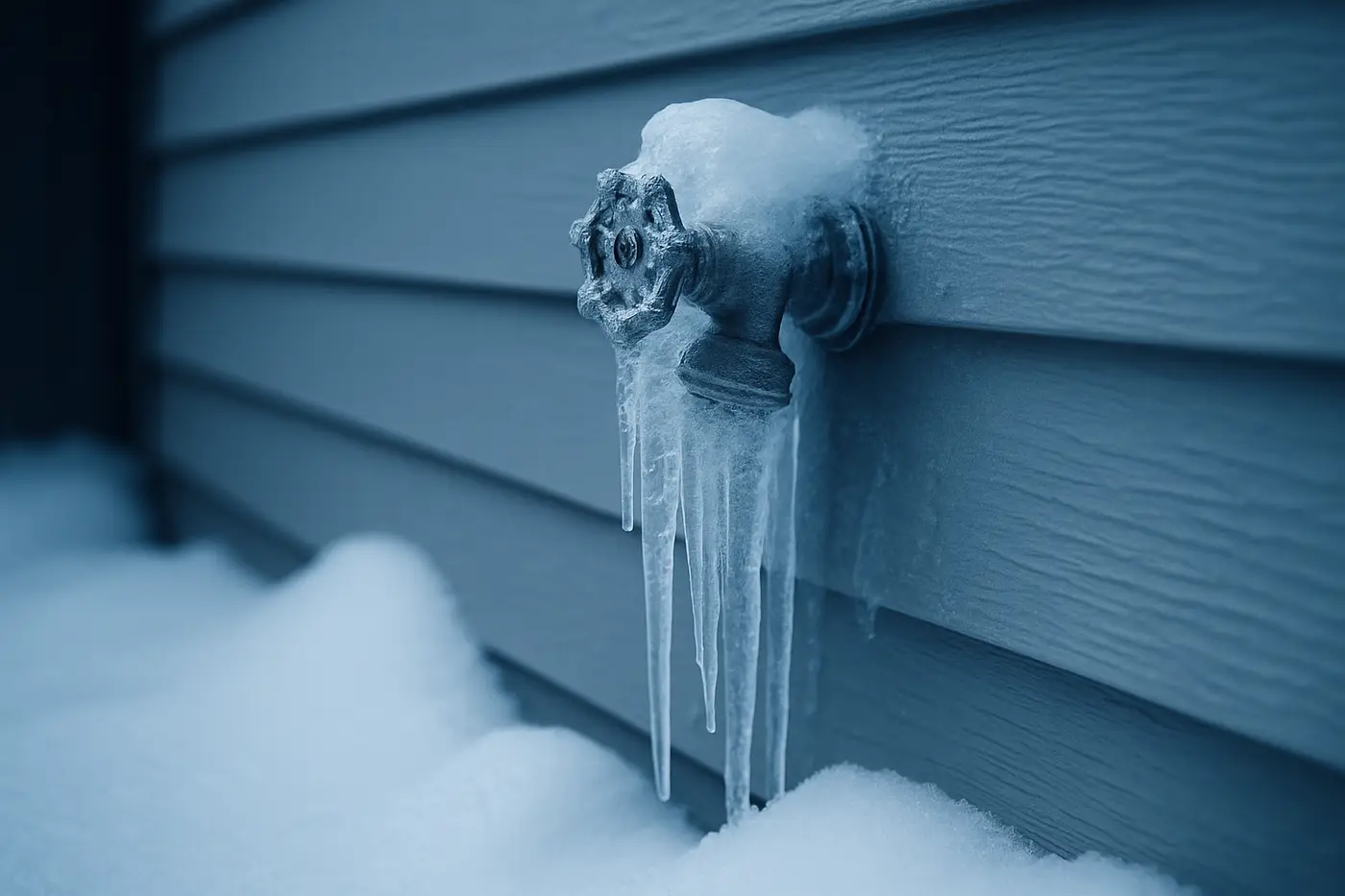
A pipe that freezes during a cold snap can split while it is full of ice, but the ice plugs the split. Nothing leaks until the temperature climbs. In Calgary, where a chinook can swing the temperature above freezing quickly, the burst pipe calls often come the day it warms up, not the coldest night. If your home went through a deep freeze, check pipes on exterior walls, in the crawlspace and near the garage once it thaws. Our guide to frozen pipes in Calgary covers safe thawing.
If the burst was in grey Poly-B pipe, ask the plumber about the condition of the rest of the system. Poly-B was installed from around 1978 to 1997 and fails at fittings and along runs, and our Poly-B replacement page explains the options.
FAQ
Common Questions
Where is the main water shut-off in a Calgary house?
In most Calgary houses it is in the basement, connected to the water meter where the service line comes through the foundation wall, often near the furnace room or under the stairs. It is usually a round handle (gate valve) turned clockwise until it stops, or a lever (ball valve) turned a quarter turn so it sits across the pipe. Find it before you need it, keep the space in front of it clear, and make sure everyone in the house knows where it is.
What if my main shut-off will not close?
Close what you can: the valve a little further, fixture stops, the supply to the hot water tank. Then call a plumber. The City service valve, or curb stop, near the property line is City property even when it sits on your land, so do not dig for it or force it. Owners or certified plumbers can book a City turn-off. In 2026 the City charges $57.22 for a single service in regular hours, $101.72 outside hours or within 24 hours, and $178.00 for an emergency off-and-on in one appointment.
Does home insurance cover a burst pipe in Calgary?
Standard Canadian home policies typically cover sudden and accidental water damage from indoor plumbing, which is what a burst pipe usually is. Coverage details vary, so call your insurer or broker early. Help the claim by taking photos and video before cleanup, keeping the failed piece of pipe or fitting, and asking the plumber for a written report on what failed and why. Note that the City says repairs to the private water service line outside the house usually are not covered by a basic policy.
How much does burst pipe repair cost in Calgary?
In 2026, before GST, an accessible burst or leaking pipe repair typically runs $275 to $1,200 in Calgary, covering a copper, PEX or Poly-B section. When the plumber has to open drywall or a ceiling to reach the pipe, expect $650 to $2,500, which covers access and patch but not paint. After-hours, weekend and holiday call-outs add $175 to $395. Your final price is quoted in writing on site before any work starts.
Is a leak in my front yard my problem or the City's?
It depends where it is. The City owns the water service from the main to the property line. You own the pipe from the property line to the house. Water pooling on the street, the boulevard or coming up through pavement is a 311 report. A leak between the property line and the house is yours, and the City says a private-side leak must be repaired within 15 days or it may issue a remedial order. You hire the contractor, and the contractor gets the permits.
- #burst-pipe
- #emergency
- #main-shut-off
- #insurance
- #water-damage