In Depth
Backwater Valve Plumber In Calgary: How It Actually Works
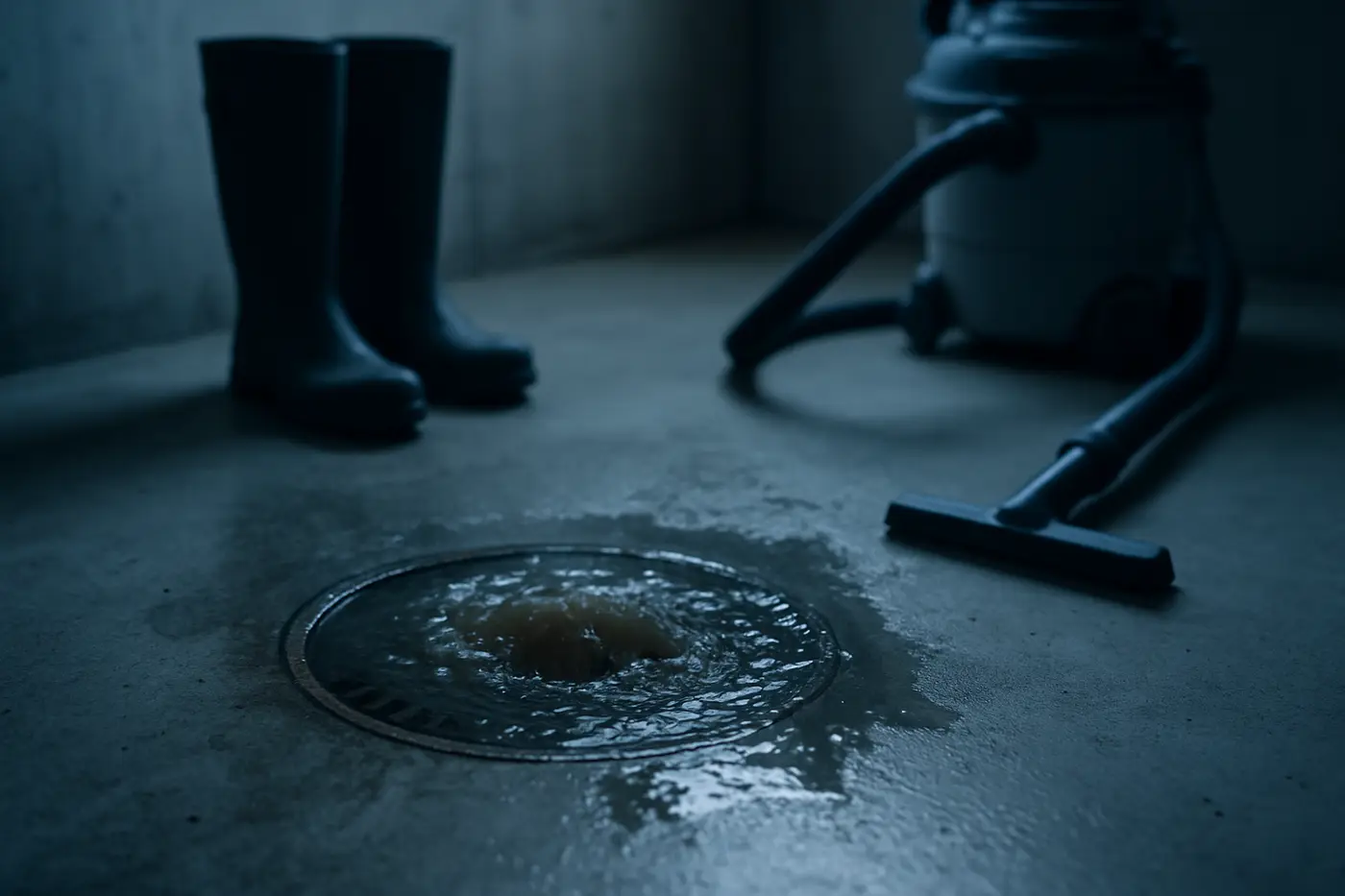
A backwater valve plumber in Calgary spends most nights on one of two calls: sewage coming up the basement floor drain, or a sump pit overflowing because the pump quit. Both end with a wet basement, but they are different problems with different fixes, different rules and different insurance answers. A backwater valve stops sewage from the street main flowing back into your house. A sump pump lifts groundwater collected by the weeping tile and sends it outside. Many Calgary houses need both working. If you are standing in a flooded basement right now, the first section is for you.
Flooded basement tonight: what to do first
- Keep safe. If water is near outlets, the furnace or the hot water tank, stay out until the power is made safe. If you smell gas, leave and call ATCO Gas’s emergency line or 9-1-1 from outside.
- Stop using water upstairs. If the water is coming from the floor drain, every flush and every load in the washer adds to it.
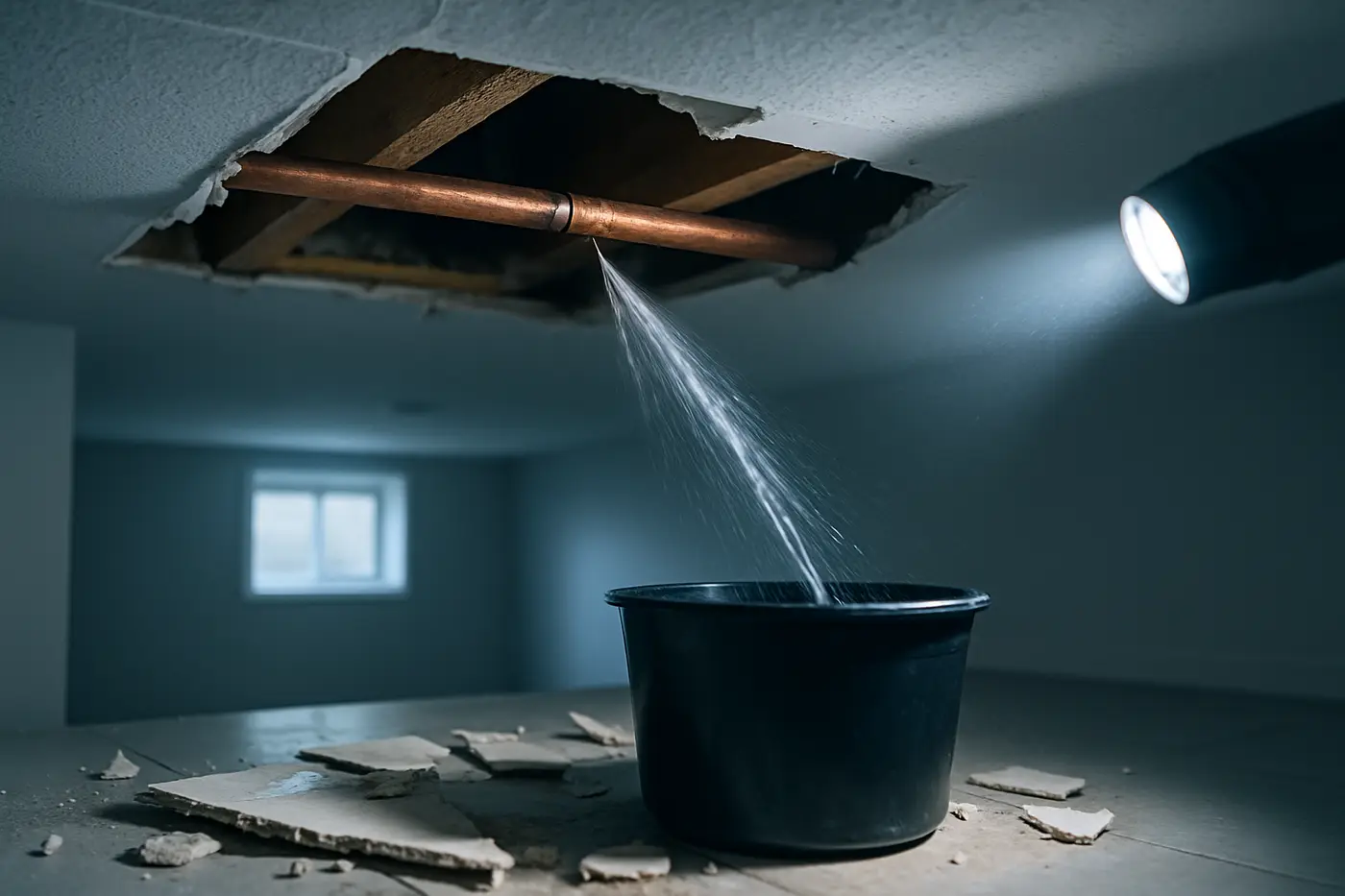
- Look at where it is coming from. Dark, smelly water at the floor drain is a sewer backup. Clear water rising around the sump pit, or seeping at the walls, is groundwater. Water running from a pipe or tank is a plumbing leak and needs the main shut-off closed.
- For a backup, call 311. The City says to call 311 first so a crew can snake to the main and see whether the blockage is public or private. If it is private, you need a plumber.
- For a sump, check the obvious. Is the pump plugged in and is the breaker on? Is the float stuck against the side of the pit? If it is still dead, it needs replacing.
- Photograph everything before cleanup, for the insurer.
What the plumbing code expects
The City of Calgary’s guide puts it plainly: Alberta’s plumbing code requires that any fixture below grade be protected from sewer backup from the street, including floor drains and basement bathrooms. The National Plumbing Code of Canada 2020, in force in Alberta since April 1, 2023, requires below-street-level fixtures subject to backflow to be protected. The City recommends a backwater valve on below-grade fixtures, and on new houses the valve is checked at the groundwork inspection. New basements in communities like Redstone are built with this in mind. Older houses often are not.
Installing a valve needs a plumbing permit, and the pipe must slope at least 2% toward the municipal sewer. There is no City rebate for backwater valves that we can verify, so none is built into our prices.
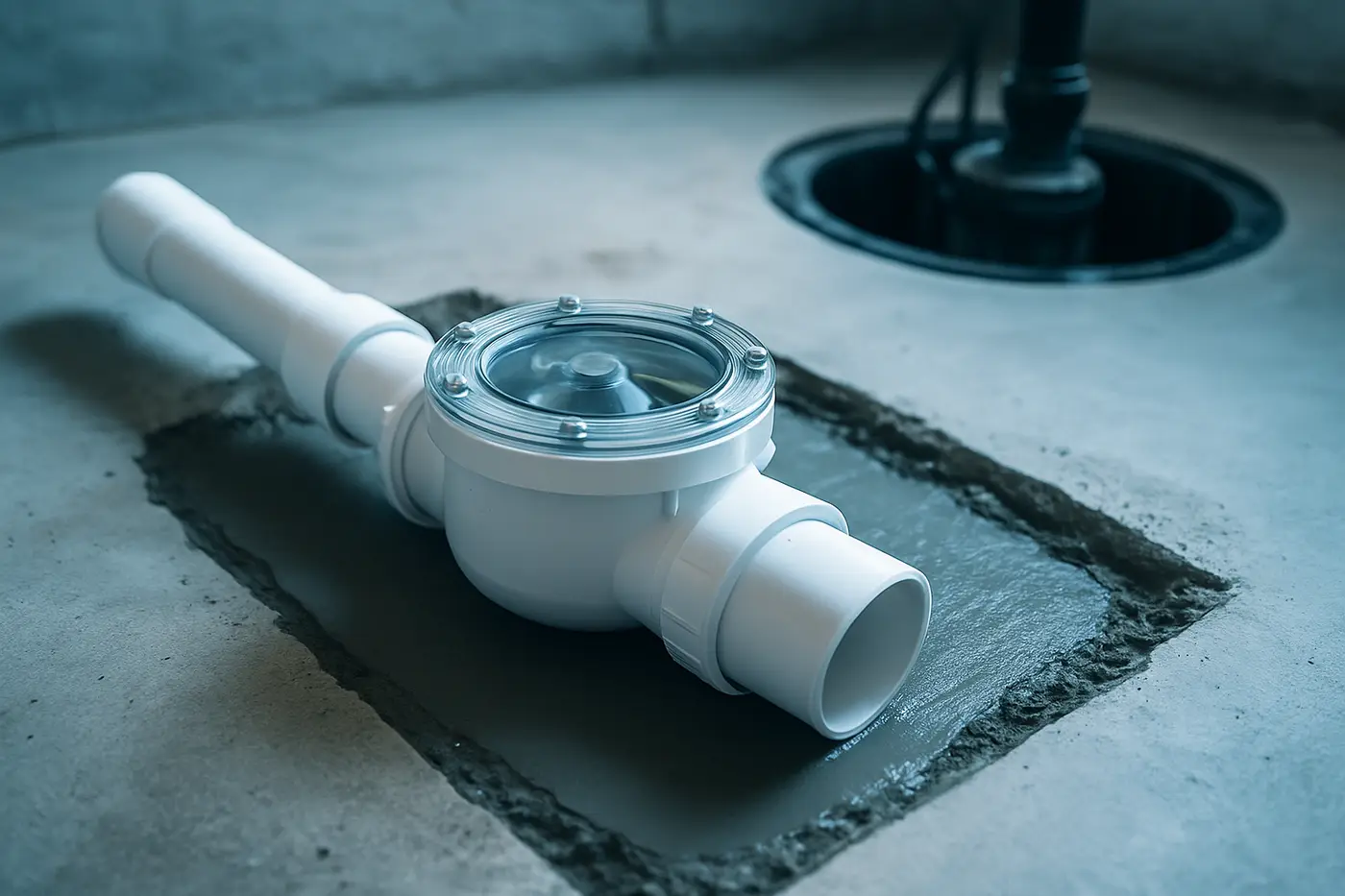
Full-port valve or branch valves
You can protect the basement two ways. The comparison:
| Full-port valve on the main sewer | Branch valves on individual fixtures | |
|---|---|---|
| What it protects | Everything downstream in the house | Only the fixture it is installed on |
| Servicing | Every year, per the City | Not required yearly, per the City |
| Typical Calgary cost | $1,800–$4,500 retrofit | Quoted per fixture on site |
| Good fit | Finished basements, several below-grade fixtures | One floor drain or a single basement bathroom |
| Watch for | Upstairs fixtures cannot drain while it is closed | Unprotected fixtures stay exposed |
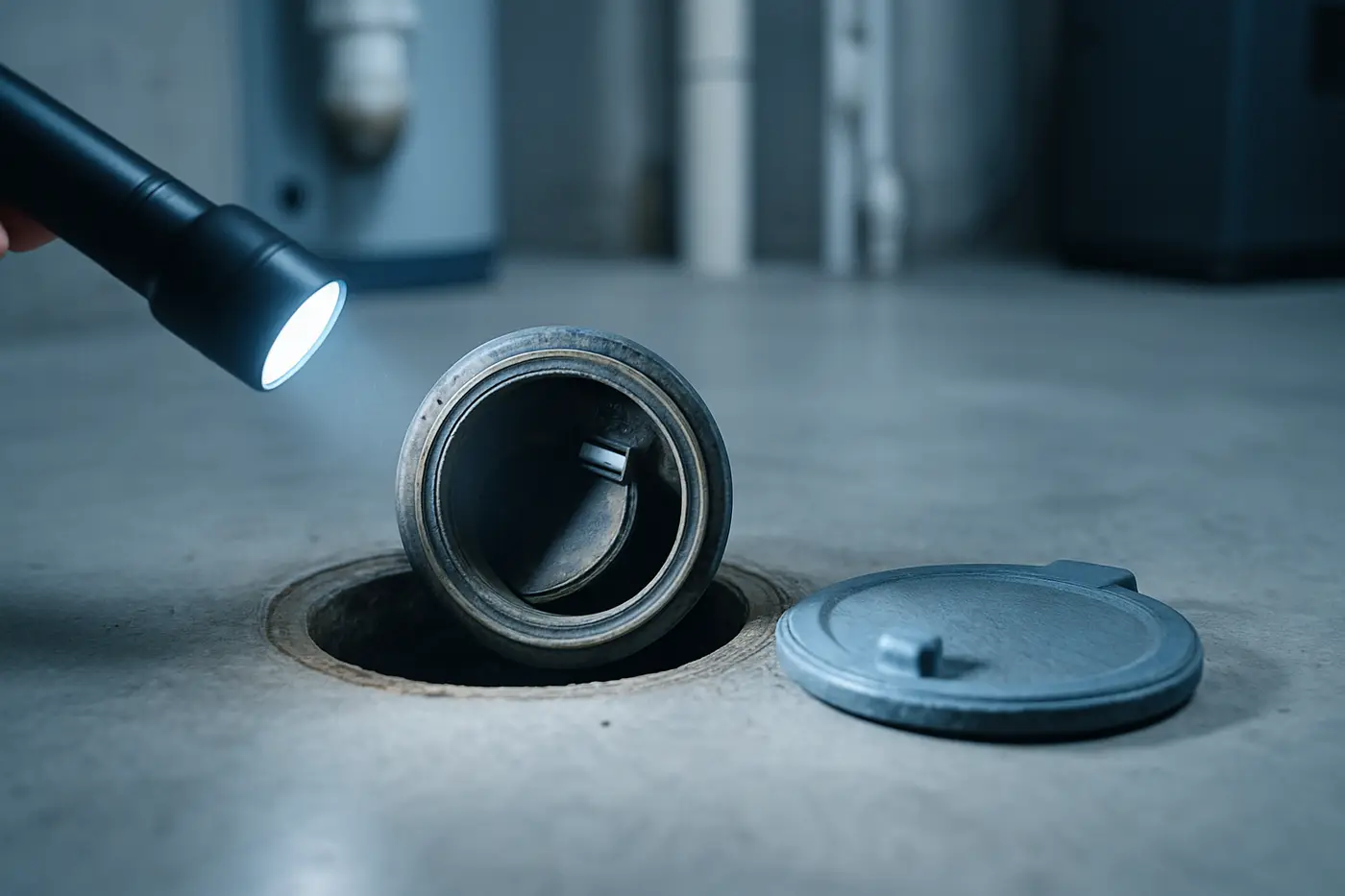
A full-port valve does its job only if it closes. Debris, grease or paper can hold the flap open, which is why the City says it needs servicing every year. Annual cleaning typically runs $150–$350. If you do not know when yours was last opened, assume it is due.
One more rule catches many Calgary owners: a normally open backwater valve may not serve more than one dwelling unit, and a secondary suite counts as a separate unit (City advisory, October 4, 2022). If a legal suite is in the plan, raise it before the valve is quoted.
How a retrofit valve goes in
Adding a backwater valve to an existing house is floor work, and it follows a set order:
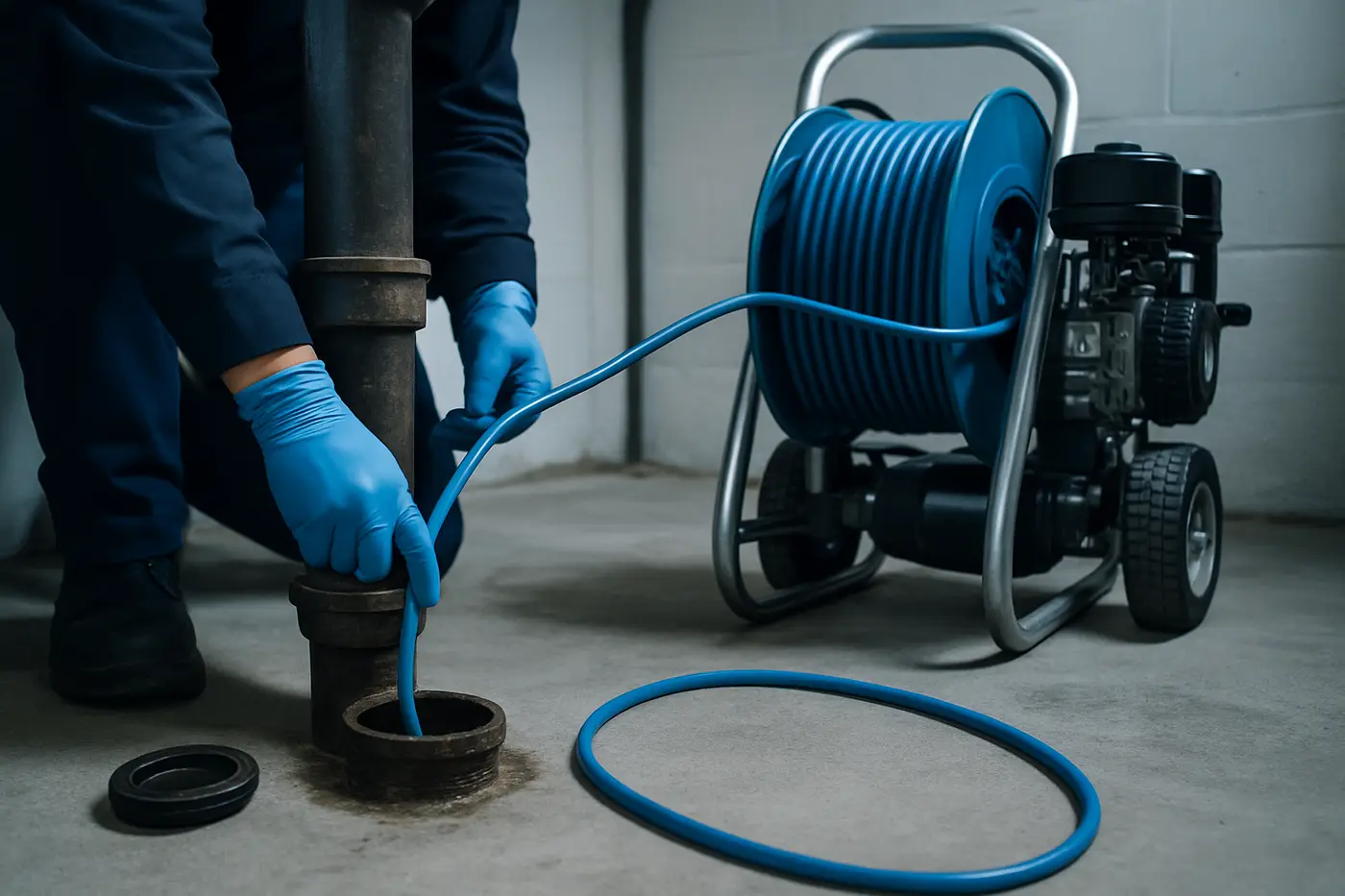
- Camera the line. The main sewer is scoped from the cleanout to confirm where it runs under the slab and that the pipe is sound where the valve will sit. Putting a new valve on a cracked or root-filled section solves nothing.
- Permit. Installing a backwater valve needs a plumbing permit, pulled by the contractor.
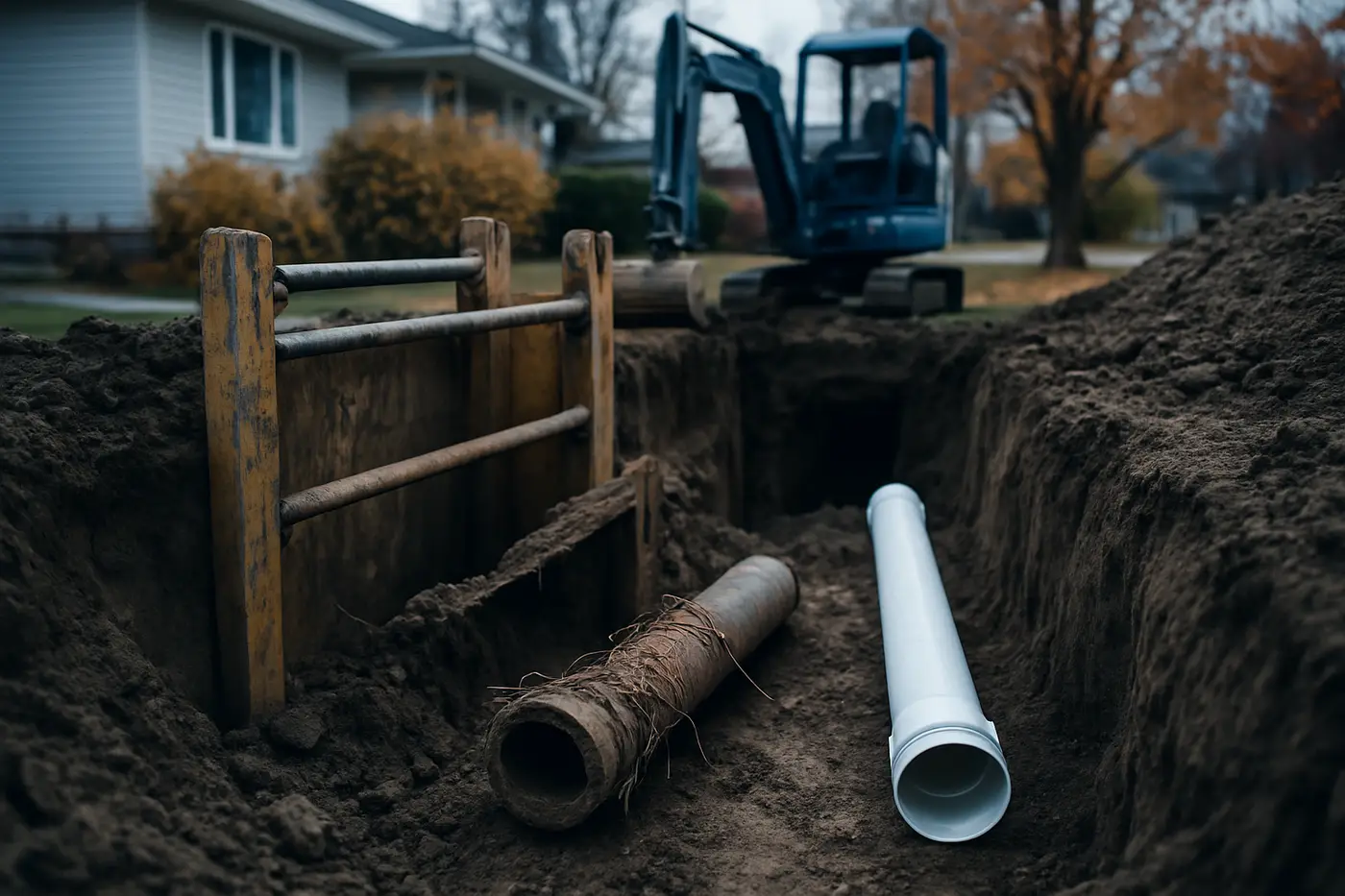
- Cut and dig. The concrete is cut and the soil removed down to the main line, usually close to where it leaves the house.
- Install. The valve goes in level and accessible, with the pipe sloping at least 2% toward the municipal sewer.
- Inspect and close up. After inspection, the hole is backfilled and the concrete patched. Flooring is not part of the plumbing price.
Plan the access cover before you finish the basement. A valve buried under carpet or a built-in cabinet is a valve that never gets its annual service. A retrofit typically runs $1,800–$4,500, with depth, the floor finish and how much is built over the line deciding where in that range it lands.
Sump pumps and where the water goes
The weeping tile around the foundation collects groundwater and drains it to the sump pit. Under the Wastewater Bylaw 14M2012, foundation drainage must not go into the sanitary sewer without a permit, except connections made before 1973. Discharge must not flow onto neighbours, lanes, sidewalks, boulevards or streets, or back into the weeping tile, and the City says to discharge two metres from the foundation. Downspouts matter here too: they must not connect to the weeping tile, and the City’s flood-readiness page says eavestroughs and extensions should drain at least 1.5 m from the house.
The City is clear that sump maintenance is the homeowner’s job and that it does not respond to these calls. Its advice matches what we tell people: a backup pump running on a battery or generator (not one powered by drinking water), a check valve on the discharge, a high-water alarm, and replacing the pump every 10 years or sooner. A sump pump replacement typically runs $600–$1,800.
River communities and the 2013 flood
In June 2013, 26 neighbourhoods near the Bow and Elbow were under mandatory evacuation, including Mission, Elbow Park, Bowness and the downtown core in the City Centre. A backwater valve does not stop overland flooding, which is a separate insurance add-on, but in older river-flat houses it is the part of flood readiness a plumber can actually fix. Our sewer line repair page covers what happens when the camera finds a failing connection at the same time.
What can wait for daytime
A backup that has been cleared, or a sump that a temporary pump is keeping up with, can wait. Valve installation, permits and concrete work are daytime jobs at daytime labour of $110–$165 an hour. What cannot wait is sewage still rising or a pit about to overflow onto a finished floor. For a deeper look at valve choices before you commit, read who needs a backwater valve and what it costs.
Last updated September 26, 2026