In Depth
Burst Pipe Repair In Calgary: How It Actually Works
A burst pipe in Calgary is usually one of three things: a copper or PEX line that froze and split in an exterior wall or garage, a failed fitting on older Poly-B or Kitec supply pipe, or a supply hose or connection that gave out. Water under pressure does not stop on its own, so a pipe burst is an emergency until the main shut-off is closed. After that, burst pipe repair is often a same-visit job, and sometimes one that can wait until morning.
Close the main before anything else
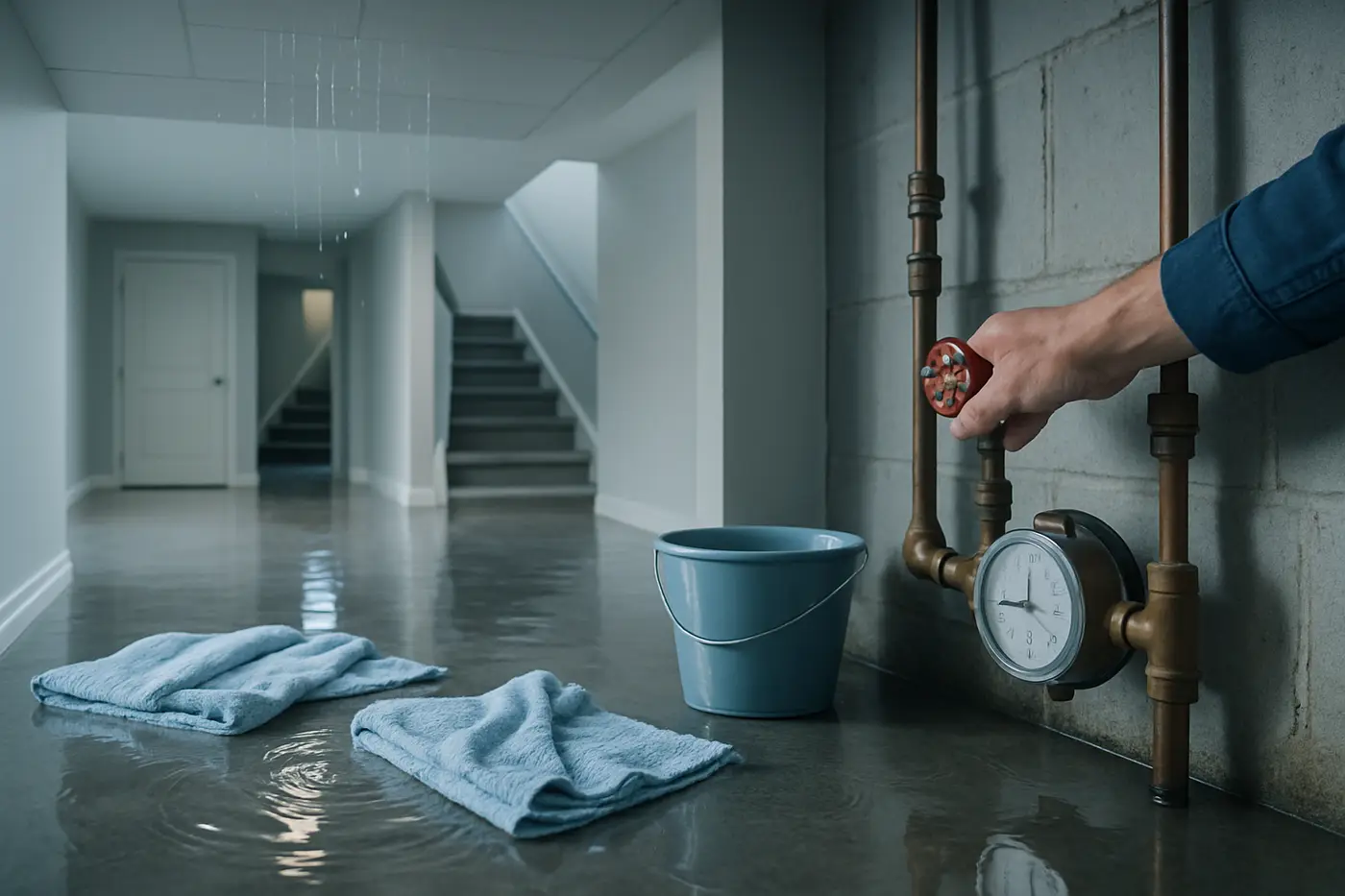
In most Calgary houses the main shut-off is in the basement, where the water service comes through the foundation, connected to the water meter. Turn it clockwise until it stops, or turn a lever a quarter turn. Then open the lowest tap in the house, usually a laundry sink or basement bathroom, to drain the pressure out of the lines above. If the burst is on the hot side, also close the cold inlet valve on top of the hot water tank.
If the main valve is seized or breaks, do not keep forcing it. The service valve at the property line is City property, and a plumber can arrange a City turn-off. Step-by-step instructions, including what to move and what to photograph, are in what to do when a pipe bursts.
In a condo or apartment
Your unit’s shut-off may be under the kitchen sink, behind an access panel in a closet or in a mechanical room, and some units have none that you can reach. If you cannot stop the water, call building management or the property manager at the same time as the plumber. In downtown and Beltline towers, water from a burst on one floor often shows up several floors below, running down shared risers and stacks, so the unit with the stain is not always the unit with the break. The plumber needs access through building management to trace it, and the repair and the damage may involve more than one owner’s insurance.
Where pipes burst in Calgary homes
Most bursts we see happen in a handful of predictable places:
- Exterior walls, especially kitchen sink and laundry lines.
- Bonus rooms and bathrooms over garages, where the pipe runs through a floor with cold air underneath.
- Hose bibs. A frost-free hose bib left with a hose attached cannot drain, so the pipe inside the wall freezes and splits. You find out in spring, the first time you turn it on.
- Crawlspaces and cantilevered floors in split-levels and older bungalows.
- Around the hot water tank, where connectors and valves take thermal stress.
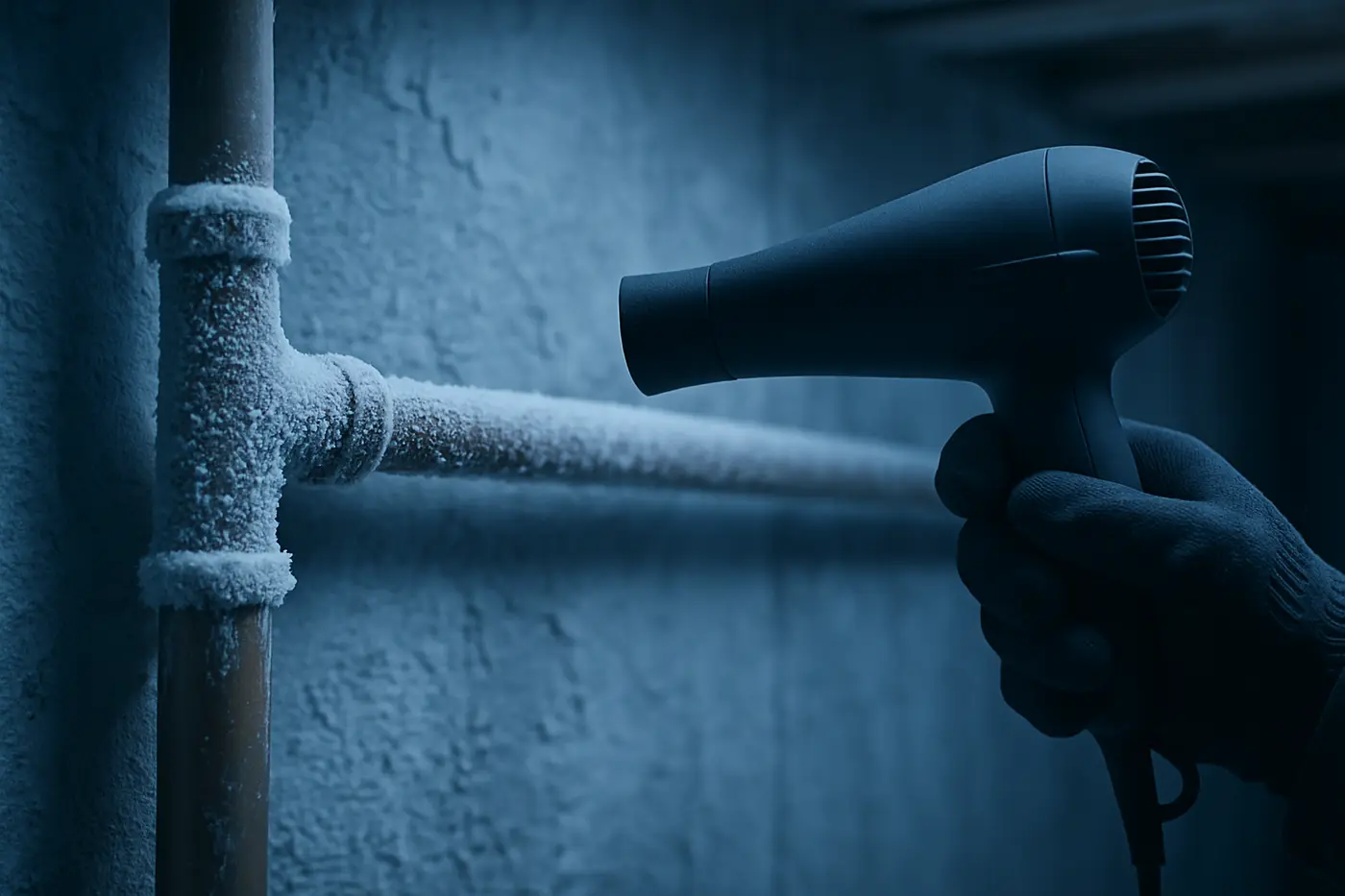
Weather decides the timing. January in Calgary averages −7.6°C, but the daily high goes above zero on about 17.6 days while the low dips to zero or below on about 30 days, so pipes freeze and thaw over and over. Chinooks make it sharper: about one in three winter days in southwestern Alberta is a chinook day. A pipe that split at −30°C often does not leak until the chinook arrives and the ice melts. For thawing a line that has not burst yet, see frozen pipe repair.
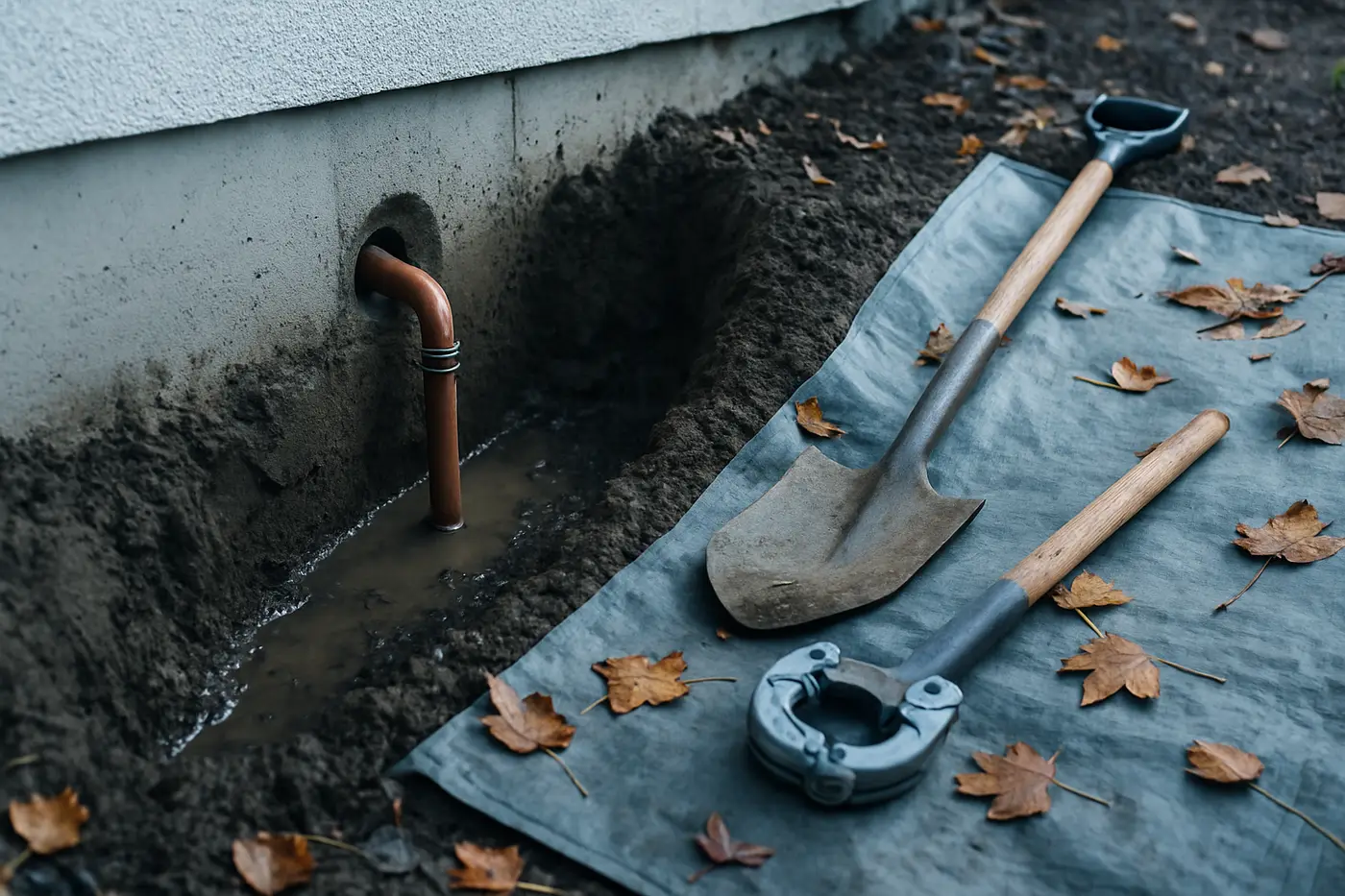
The water service line outside rarely bursts from frost. City standards bury service pipes under 2.7 metres of cover in clay and 3.3 metres in gravel. When a service line does fail underground, it is a deep excavation job covered on our water line repair page.
What the pipe is made of changes the repair
Copper is the most common supply pipe in older Calgary homes. Freeze splits in copper are clean to repair: cut back past the bulge, solder or press in a new section.
Galvanized steel shows up in the oldest homes. It corrodes from the inside and fails at threads. Houses from the early 1960s, like many in Brentwood in NW Calgary, may still have original galvanized or early copper, and one repair can disturb the next weak joint.
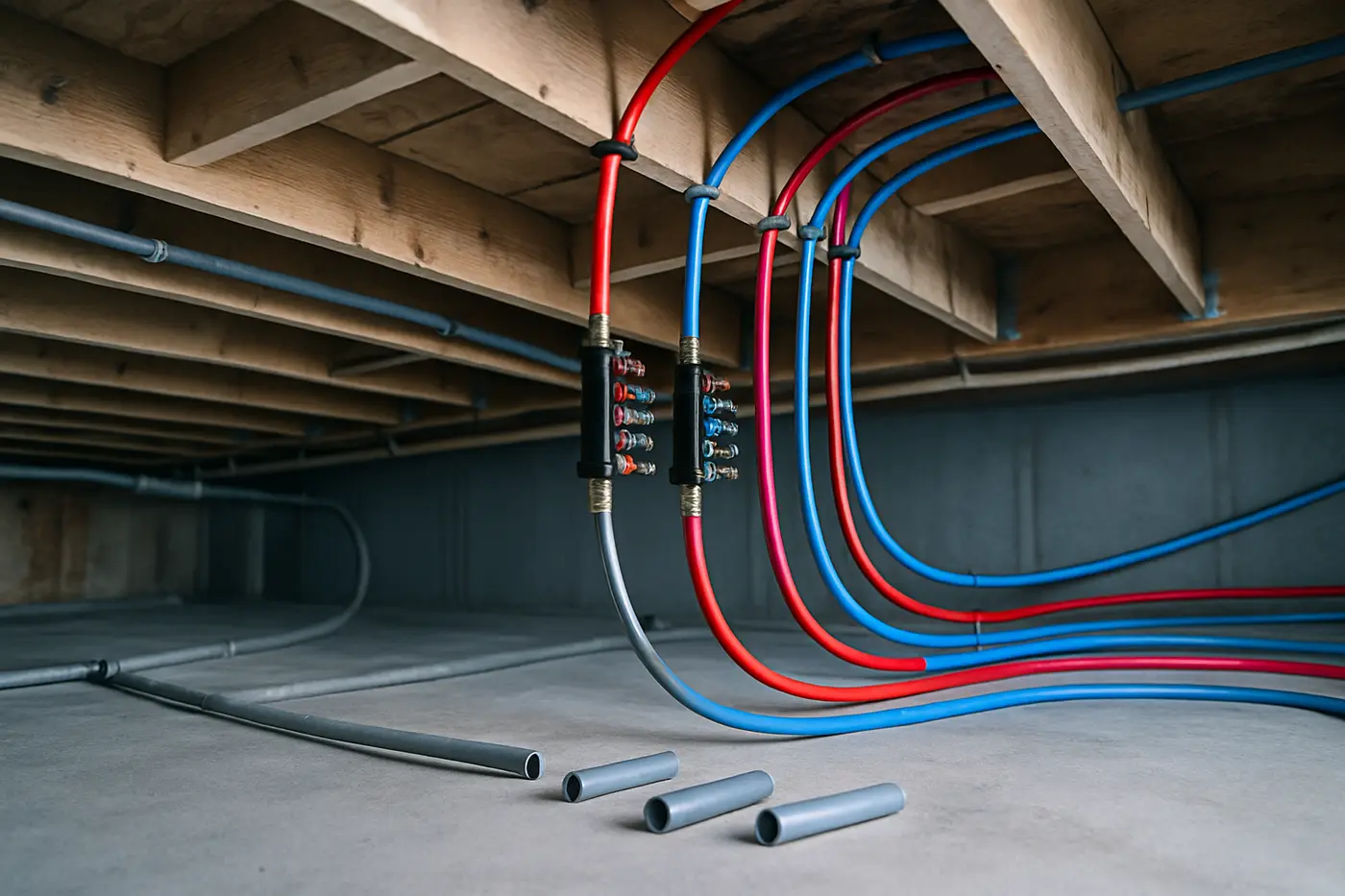
Poly-B (polybutylene) is grey plastic supply pipe installed from around 1978 to 1997. It fails at fittings and along runs. Communities built in that era, such as Falconridge, established in 1979, are where it turns up. The Canadian class actions are all closed.
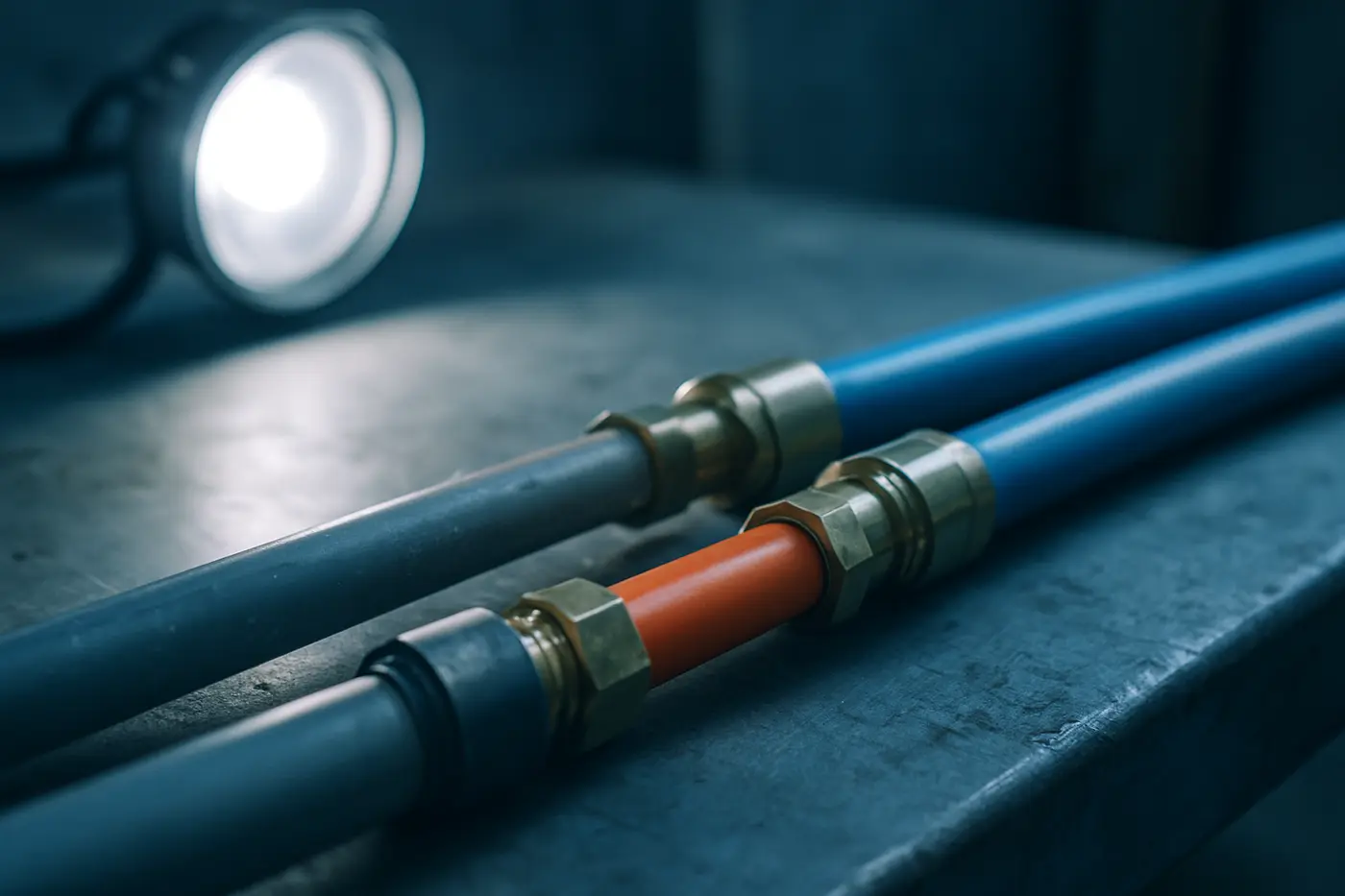
Kitec is PEX-AL-PEX pipe with brass fittings, sold from 1995 to 2007, usually orange and blue. The brass fittings are what fail. Its settlement is also closed.
PEX in newer homes rarely splits along the pipe, but fittings, supply hoses and frozen sections still fail.
Repair the section or repipe?
| Your situation | Repair the section | Talk about a repipe |
|---|---|---|
| First freeze split in copper or PEX | Yes | |
| Failed supply hose, valve or tank connector | Yes | |
| First failure on Poly-B | Yes, transition to PEX | Start planning |
| Second Poly-B failure in the house | Yes | |
| Kitec with leaking brass fittings | Short term only | Yes |
| Galvanized with low pressure and rusty water | Possible, expect the next one | Yes |
| Walls already open for a renovation | Cheapest time to do it |
When the answer is a repipe, it is planned daytime work with a permit. See Poly-B replacement.
How burst pipe repair runs
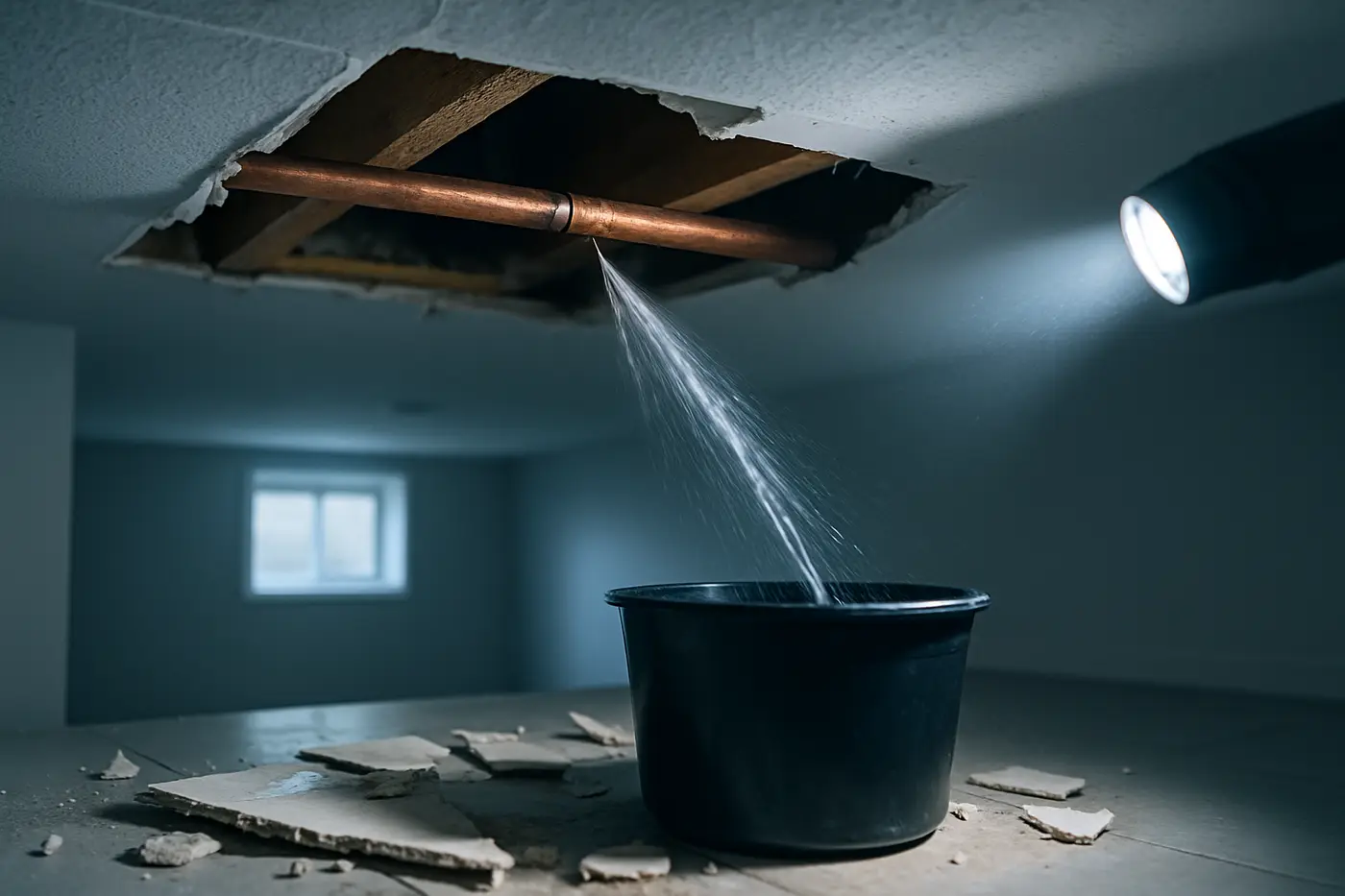
Find the break. Water travels along joists, pipes and wires, so the stain on the ceiling is often not under the break. The plumber traces the wet path back. When the source is hidden, leak detection (acoustic, thermal or a pressure test) finds it before any drywall is cut.
Open only what is needed. A clean rectangle sized for the repair, patched afterward. Painting is yours.
Replace the section. Cut back to sound pipe, new copper or PEX on approved fittings, correct transitions from Poly-B, Kitec or galvanized. After a freeze, the rest of that run gets checked.
Pressure up and test. Water back on slowly, air bled at every tap, each joint checked dry.
What it costs
Typical Calgary ranges, before GST, with the final price quoted on site in writing before work starts:
- After-hours, weekend or holiday call-out: $175–$395.
- Burst or leaking pipe repair where the pipe is accessible: $275–$1,200.
- Burst pipe needing drywall or ceiling access: $650–$2,500, access and patch, not paint.
- Leak detection when the source is hidden: $300–$700.
- Poly-B or Kitec whole-home repipe to PEX: $6,500–$16,000, drywall repair not included.
If the main is closed and nobody needs water overnight, waiting for business hours saves the call-out. We will tell you when that is the smarter call.
Insurance and paperwork
Standard Canadian home policies typically cover sudden and accidental water damage from indoor plumbing, and a burst pipe is the textbook case. Photograph the damage before moving anything, keep the failed section of pipe, and ask for the plumber’s written note on the cause. No permit is needed to repair a leak; replacing water lines or repiping the house does need one.
Last updated September 26, 2026