In Depth
Frozen Pipe Repair In Calgary: How It Actually Works
Frozen pipes in Calgary are a winter plumbing emergency with a delay built in. A frozen pipe itself does little damage: you simply lose water at a tap or two. The damage comes when ice splits the pipe and the thaw arrives, sometimes hours later, sometimes with the next chinook. That is why the first decision is not how to thaw it, but whether to close the main shut-off before you do.
Is it frozen, or is the water off?
Work it out before you call anyone.
- One or two taps dry, the rest fine: a pipe inside the house is frozen, most often on an exterior wall, in a bathroom over the garage or in a crawlspace.
- Whole house dry, neighbours have water: the freeze is on your side, usually where the service pipe comes through the foundation or at the meter in the basement.
- Whole street dry: probably a City-side outage or main break. Report it through 311. No plumber can fix a City main.
Calgary has had several reminders of how fast this happens. In December 2022, the City reported about 200 calls in a few days, almost all private residential freezing pipe problems. In the January 2024 cold snap, lows at Calgary International hit −35.6°C on January 12, −34.8°C on January 13 and −36.2°C on January 14, and the Calgary Fire Department reported complaints about frozen and leaking pipes had more than tripled from the same time the year before.
Thawing a frozen pipe safely
If you can reach the pipe and it is not visibly split, you can often thaw it yourself.
- Open the tap the pipe feeds, hot and cold. Moving water speeds thawing and shows you when it is clear.
- Heat from the tap end back toward the ice, so melting water has somewhere to go.
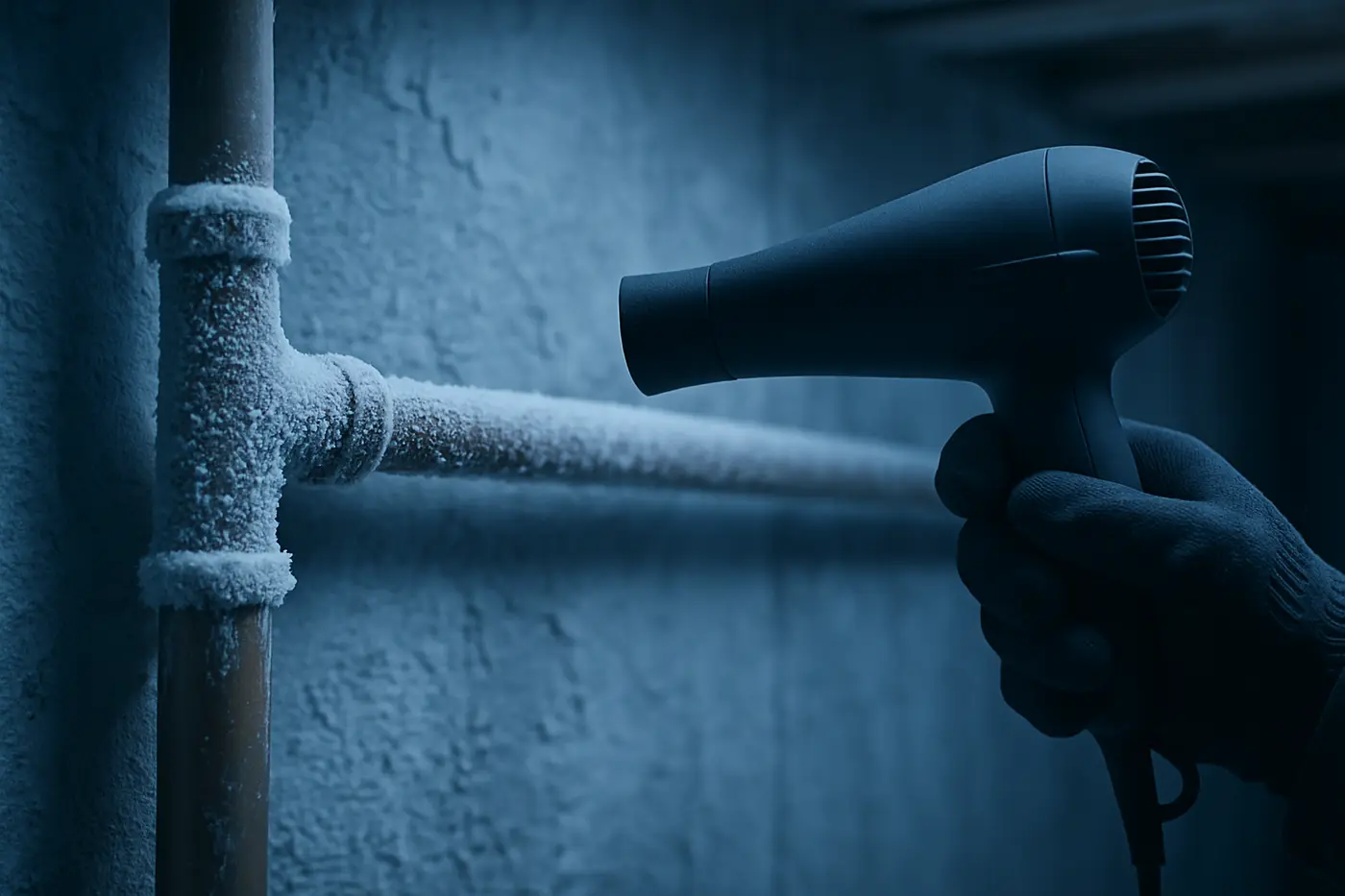
- Use gentle heat only: a hair dryer, towels soaked in warm water, or a space heater set at a safe distance from walls, curtains and anything that can burn, and never left unattended.
- Keep the heat on until full flow returns, then check the pipe along its length for drips.
Never use a torch, a lighter or any open flame. It can set framing and insulation on fire inside the wall, it melts plastic pipe, and heating a blocked copper pipe can make it burst.
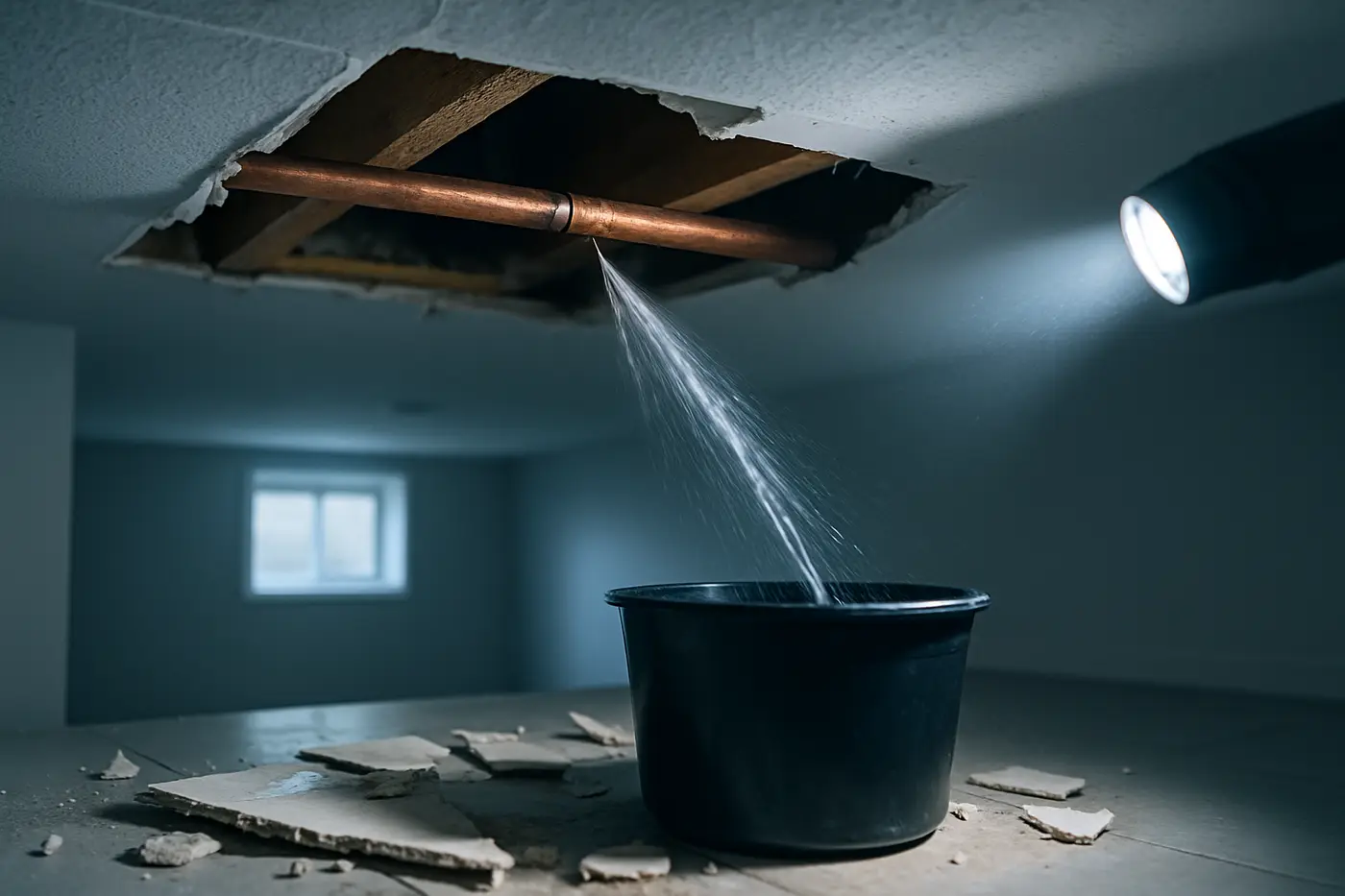
If the pipe is bulged or cracked, or water appears as it thaws, close the main shut-off right away. In most Calgary houses it is in the basement, connected to the water meter. Our guide to frozen pipes in Calgary walks through each step with more detail.
During the January 2024 cold snap, an Alberta Emergency Alert on the evening of January 13 asked Albertans to cut electricity use to essentials. Space heaters draw a lot of power. If the grid is under strain, thaw one pipe at a time and do not load a circuit with several heaters.
Where Calgary pipes freeze
| Where it froze | What you notice | First step | Who fixes it |
|---|---|---|---|
| Kitchen or laundry line on an exterior wall | One fixture dry | Open cabinet doors, gentle heat | You, or a plumber if you cannot reach it |
| Bathroom or bonus room over the garage | Upstairs fixtures dry | Close the garage, warm the space | Plumber, often insulation or rerouting |
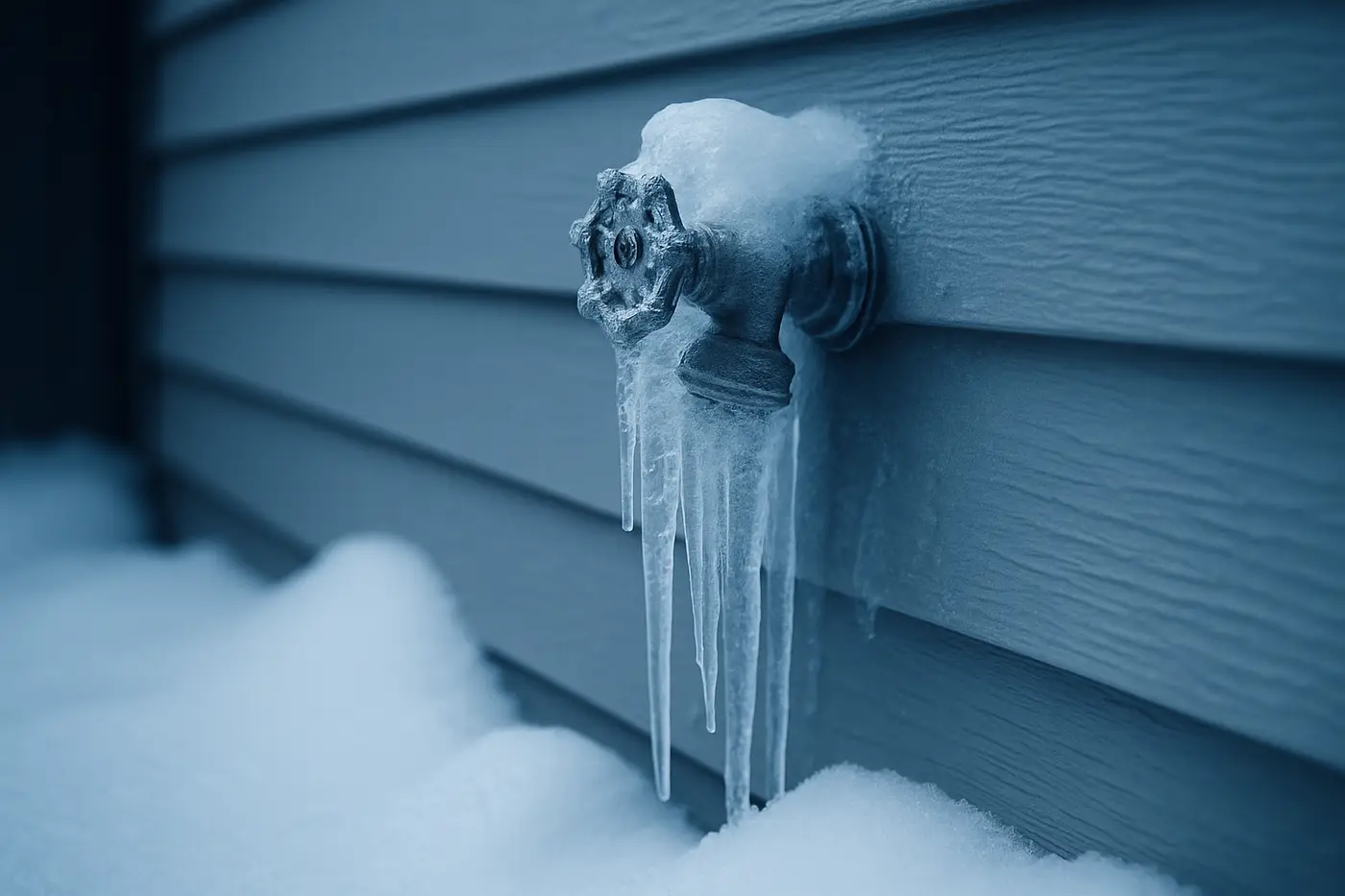
| Hose bib line inside the wall | Discovered in spring as a leak | Close its inside valve if it has one | Plumber |
| Pipe at the foundation or the meter | Whole house dry | Warm the basement area, call | Plumber for your pipe, City charge for a frozen meter |
| City main or street | Whole street dry | Report to 311 | The City |
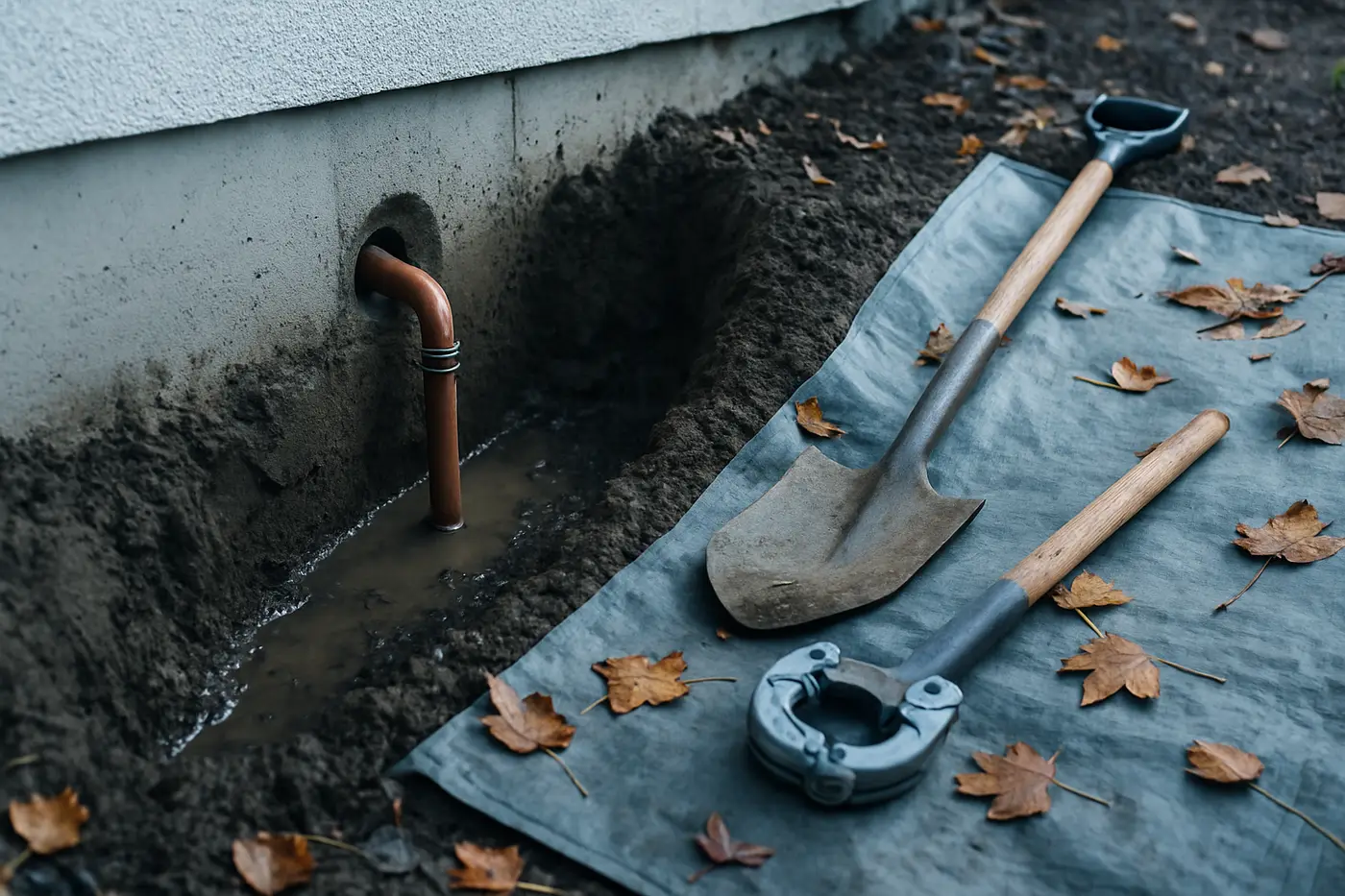
The service line in the yard is rarely the problem. City standards bury service pipes under 2.7 metres of cover in clay and 3.3 metres in gravel. When one does freeze or fail, the job becomes deep excavation, covered on our water line repair page.
The frozen meter charge
The water meter is City property, but protecting it against freezing is the owner’s job. If it freezes or is damaged, the City charges for it: for a 15 mm meter in 2026, $278.19 during regular hours and $322.69 for overtime or emergency. Keep the basement area around the meter heated and seal drafts where the service pipe enters the house. A meter in a closed-off, unheated corner of the basement is the one most at risk.
The thaw is when the damage shows
January in Calgary averages −7.6°C, yet the daily high rises above zero on about 17.6 days while the low reaches zero or below on about 30. Pipes freeze and thaw over and over. About one in three winter days in southwestern Alberta is a chinook day, and a pipe that split at −30°C often does not leak until the warm wind arrives. If water shows up in the basement or the garage ceiling during a chinook, treat it as a burst: close the main and see burst pipe repair.
Older and newer homes freeze in different places
Post-war bungalows in Killarney-Glengarry tend to freeze at additions, crawlspaces and older exterior walls with little insulation. Newer houses in communities such as Cranston in SE Calgary freeze more often at bonus rooms over attached garages and at hose bibs left with a hose connected. Either way, the fix after the thaw is the same: find out why that spot got cold and correct it, whether that means insulation, sealing a draft or moving the pipe.
Before the next cold snap
Most of the frozen pipe calls in a Calgary winter could have been prevented in October. The short list:
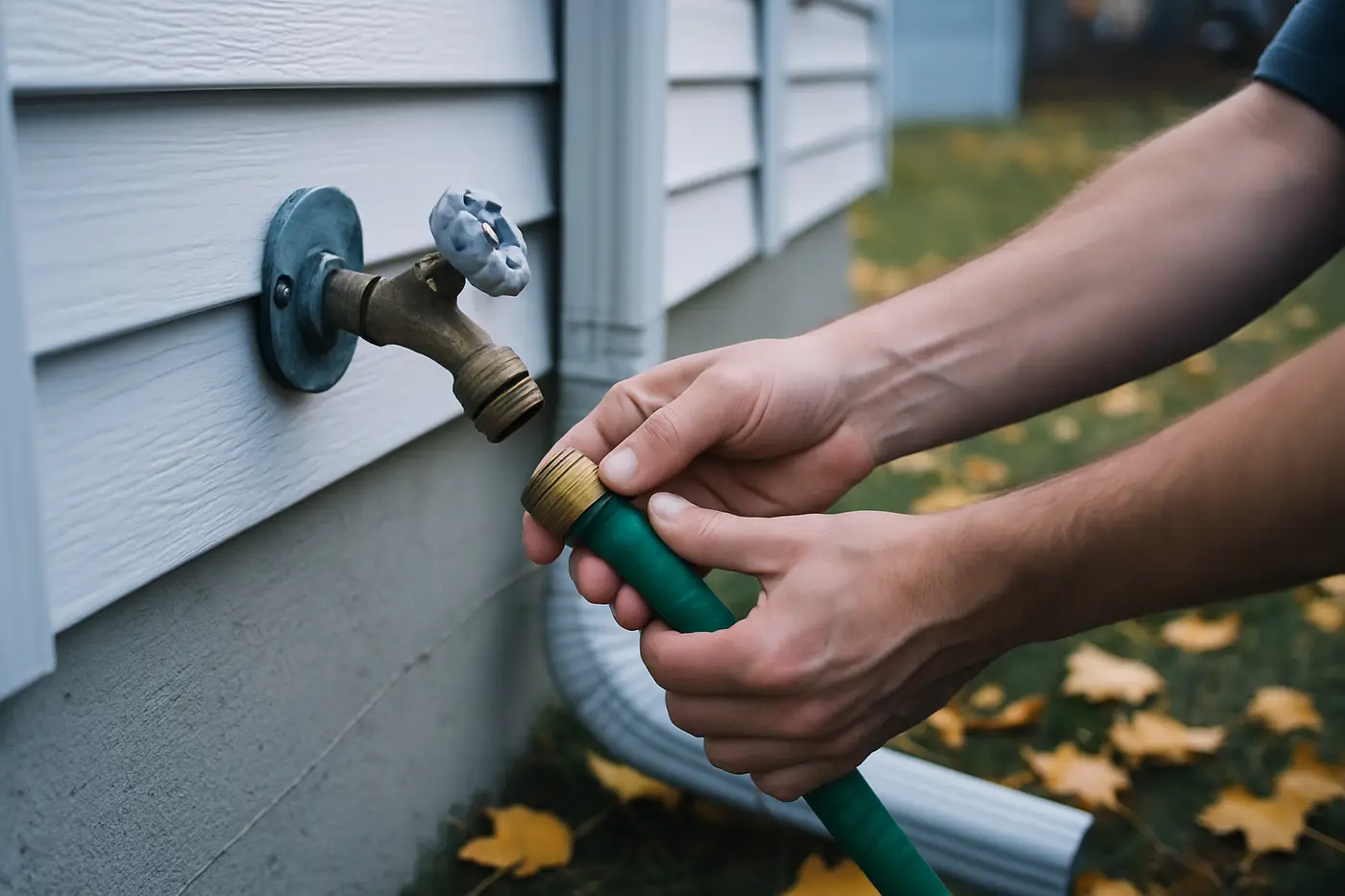
- Disconnect garden hoses, close the inside valve that feeds each hose bib if there is one, and drain the bib.
- Seal drafts where pipes and the water service pass through exterior walls and the foundation.
- Keep the garage door closed when there is living space or plumbing above it.
- On the coldest nights, open cabinet doors under sinks on exterior walls and let a problem tap run at a thin stream.
- Never turn the heat off when you travel, and have someone check the house during a cold spell.
The full list is in our fall winterization checklist.
What it costs
Typical Calgary ranges, before GST, with the final price quoted on site in writing before work starts:
- Frozen pipe thawing with no burst: $200–$650.
- After-hours, weekend or holiday call-out: $175–$395.
- A split pipe, accessible: $275–$1,200. With drywall or ceiling access: $650–$2,500.
If only one tap is out, the rest of the house has water and nothing is leaking, a daytime visit is usually fine. If the whole house is dry on a very cold night, or a pipe is visibly split, call now.
Last updated September 26, 2026